
In a quiet city café, Ben Mann, co-founder of Anthropic, makes a striking observation: “Twenty years ago, I would have enrolled my daughter in the best schools. Today, I think it no longer matters.”
The statement signals a profound shift. For generations, top-tier schools represented security, opportunity, and a clear path to success. Parents followed a well-trodden map: the right kindergarten, the right elementary, the right high school, the right college. But in 2026, that map is dissolving, replaced by a landscape where learning happens everywhere, not just within classroom walls.
The Old Model: Prestige and Predictability

Historically, education revolved around institutions. Families tracked rankings, hired tutors, and meticulously planned each stage of a child’s schooling. Success was measured in test scores, grades, and college acceptance. Schools were the primary gatekeepers of knowledge, and their walls defined where learning could occur.
Yet, Mann’s reflection highlights a key truth: while schools were reliable, they were also rigid. The approach rewarded memorization and repetition—skills that machines now excel at—while offering less preparation for a world in which adaptability and creativity are paramount.
The Quiet Revolution in Learning
Today, education extends beyond campuses. A child at home can use AI tools to explore concepts in personalized ways: asking for explanations “like I’m five, then like I’m in college,” testing assumptions, and iterating without judgment. Knowledge is no longer confined to textbooks; it is accessible in living rooms, libraries, and even on phones.

This shift redefines the “best school.” It’s no longer solely about prestige or facilities but about how well a child can engage with information, ask critical questions, and apply knowledge in diverse contexts.
What Matters Most Now
The emerging focus is less on competing with machines and more on collaborating with them. Students who can direct AI to explore problems, critique solutions, and generate ideas are developing skills far more durable than rote memorization. The table below illustrates how priorities are changing:
| Traditional Focus | Emerging Focus |
|---|---|
| School rankings & brand name | Quality of thinking, adaptability & character |
| Access to libraries & labs | Access to trustworthy tools & mentors (human + AI) |
| Test scores & grades | Ability to learn new skills quickly & ethically |
| Prestige of institutions | Breadth of experiences & real-world projects |
| Competing as individuals | Collaborating across humans, cultures & machines |
In essence, the value of a school lies in how it integrates into a broader ecosystem of learning—one that includes home, community, and technology.
Parenting in an Uncertain World

Modern parents face a subtle challenge: preparing children for a future that cannot be fully anticipated. Emphasis has shifted to cultivating curiosity, ethical judgment, and resilience. Daily habits—asking questions, experimenting, reflecting—matter more than entering the “right” school. AI becomes a partner in exploration, not a shortcut, reinforcing skills like problem-solving, communication, and creativity.
Comfort with uncertainty and the ability to navigate complex systems are emerging as the most crucial competencies. Schools provide structure and mentorship, but the “best education” now blends formal instruction with everyday experiences and real-world projects.
The World as Classroom
Learning is no longer confined to classrooms. Streets, markets, parks, and online spaces become laboratories for observation, experimentation, and reflection. AI tools act as tutors, collaborators, and research assistants, while human guidance transforms information into wisdom.
Mann’s insight emphasizes a shift in gravity: from institutions to capabilities. The focus is no longer solely on where children learn, but how they learn to see, question, and apply knowledge responsibly.
Conclusion: Beyond the Best School
Schools remain important, but they are no longer the sole arbiters of learning. In 2026, the most valuable education teaches students to adapt, collaborate, and think ethically in a world rich with tools and information. As Mann suggests, the question isn’t “Which school?” but “What kind of mind and character are we cultivating?”
The future of learning is flexible, interactive, and layered. The “best school” is wherever curiosity thrives, questions are encouraged, and students learn to wield both knowledge and tools in service of something larger than themselves.
| Question | Answer |
|---|---|
| Do schools still matter? | Yes, for structure, mentorship, and socialization—but they’re no longer the sole gatekeepers of learning. |
| Should I stop pursuing top schools? | Not necessarily. A well-resourced school helps, but home, community, and technology are equally critical. |
| How can AI help children learn? | AI can provide personalized explanations, practice, and guidance—but it should deepen understanding, not replace effort. |
| What skills matter most? | Critical thinking, creativity, ethics, communication, collaboration, and comfort with uncertainty. |
| Do elite degrees still matter for jobs? | Some signaling remains, but employers increasingly value real-world skills and demonstrated problem-solving. |
| What does “best education” mean for adults? | Lifelong learning, adaptability, ethical judgment, and effective use of tools like AI. |

  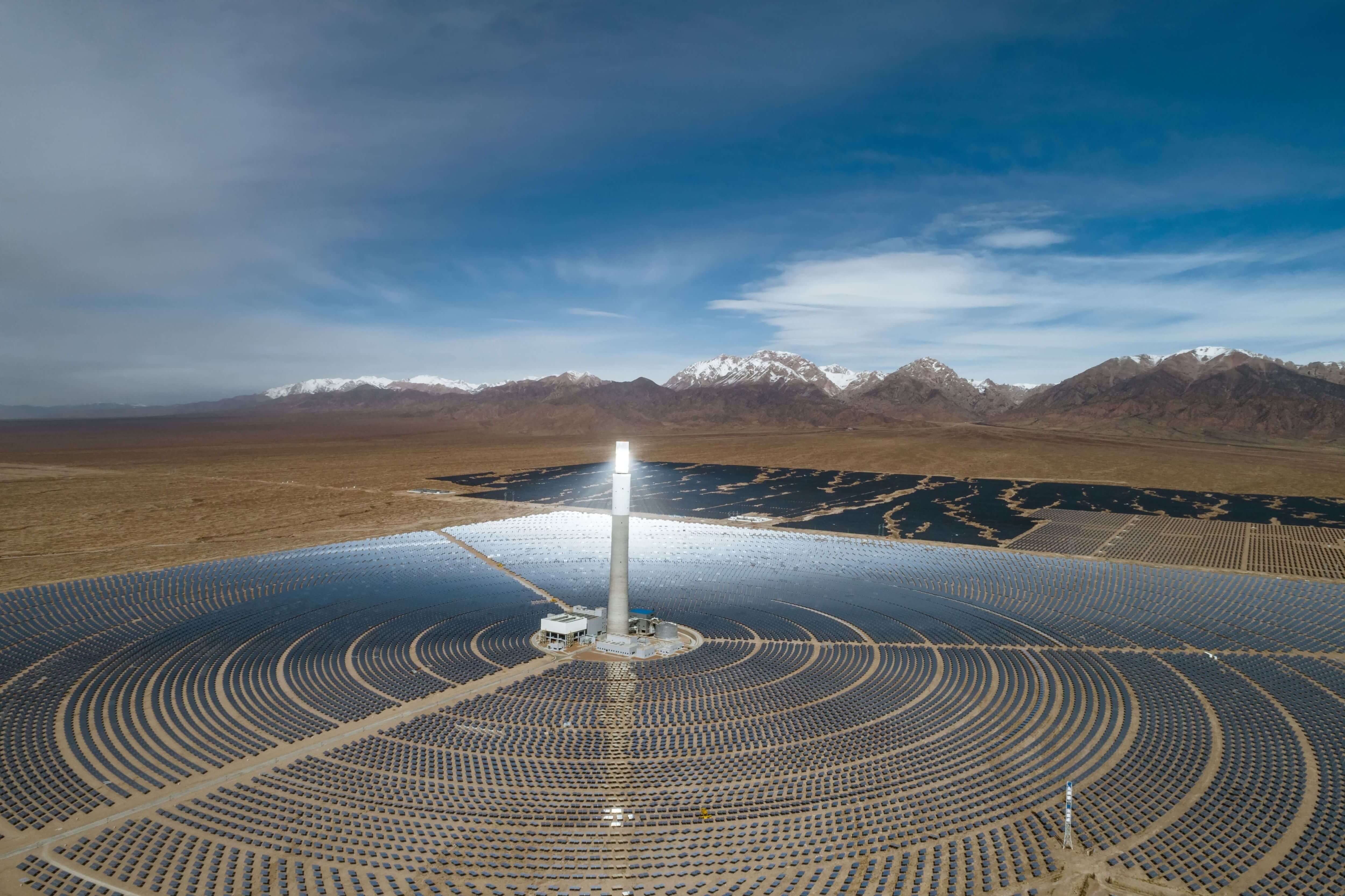 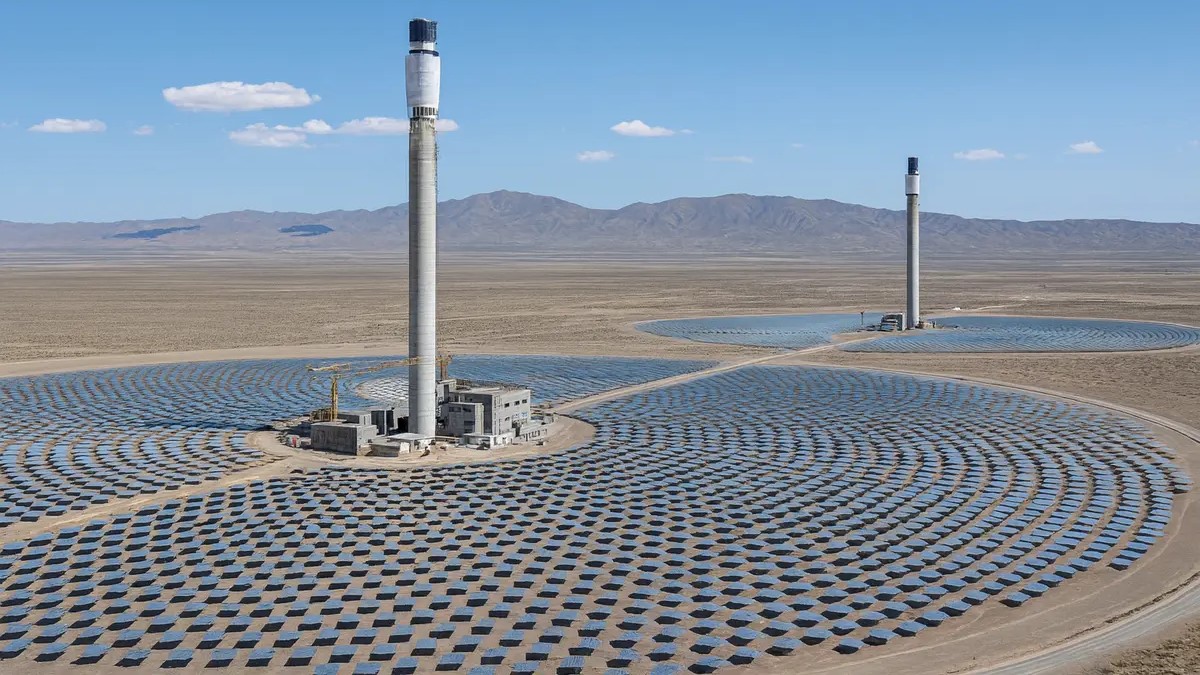 ## Scientists Are Building an “Artificial Sun” in the Desert — And It Could Change How Cities Get Power In a remote desert landscape, something extraordinary is taking shape. Thousands of mirrors stretch across the sand, reflecting sunlight toward a central tower that glows brighter than anything else in sight. Nearby, inside steel chambers and advanced laboratories, scientists are attempting something even more ambitious: recreating the energy process that powers the stars. Researchers and engineers have begun calling the project an **“artificial sun.”** The goal is simple but revolutionary — generate enormous amounts of clean electricity using the same fusion process that fuels the real sun. If successful, this technology could provide nearly unlimited energy for cities while dramatically reducing carbon emissions. ## What Is an Artificial Sun? The term “artificial sun” refers to **nuclear fusion reactors**, experimental machines designed to replicate the reaction happening inside stars. ### How fusion works In the core of the sun, hydrogen atoms collide under extreme heat and pressure. They fuse together to form helium, releasing massive amounts of energy. Scientists are trying to recreate that reaction on Earth. To do this, they: * Heat hydrogen fuel into plasma hotter than the sun’s core * Use powerful magnetic fields to hold the plasma in place * Trigger atomic fusion that releases energy If the process becomes stable and efficient, fusion could provide **clean, abundant electricity with minimal environmental impact.** ## Why the Desert Is the Perfect Location Fusion facilities and large solar energy complexes require huge amounts of space and sunlight. That’s why many experimental projects are being built in desert regions. ### Advantages of desert locations * Up to **300 sunny days per year** * Large open land areas for solar mirror fields * Low population density * Stable ground for heavy infrastructure The desert environment also allows researchers to combine fusion research with **concentrated solar power systems**, creating hybrid energy plants. ## The Role of Giant Mirror Fields One of the most striking features of the facility is the field of heliostats — massive mirrors that follow the sun across the sky. Each mirror reflects sunlight toward a central tower where heat is collected and stored. ### What heliostats do * Concentrate sunlight into extremely high temperatures * Produce steam that spins turbines * Store thermal energy in molten salt tanks * Generate electricity even after sunset This solar system provides immediate renewable power while supporting the experimental fusion infrastructure nearby. ## How the Artificial Sun Could Power Cities The long-term goal is to create power plants that operate around the clock without fossil fuels. Fusion could provide stable electricity regardless of weather conditions, solving one of the biggest challenges facing renewable energy today. ### Potential energy output Component | Purpose | Estimated Impact Solar mirror tower | Daytime renewable electricity | Up to 150,000 homes Fusion test reactors | Experimental constant power | ~50,000 homes in early phases Thermal storage tanks | Nighttime electricity supply | 4–6 hours grid backup Battery systems | Stabilize the grid | Instant response to demand spikes Although these numbers are still projections, the concept shows how multiple technologies could work together to power entire urban areas. ## Why Fusion Energy Is So Important Global electricity demand continues to grow as more systems move toward electrification — from vehicles to heating systems and data centers. Fusion energy offers several advantages compared with traditional power sources. ### Key benefits of fusion power * No greenhouse gas emissions during operation * Fuel derived from hydrogen, one of the most abundant elements * Minimal long-term radioactive waste * No risk of runaway chain reactions Because of these factors, fusion is often described as the **“holy grail of clean energy.”** ## The Biggest Challenges Scientists Still Face Despite decades of research, fusion remains one of the most difficult engineering challenges in modern science. Creating plasma hotter than the sun and controlling it inside a reactor requires incredibly precise technology. ### Major hurdles * Maintaining stable plasma for long periods * Designing materials that survive extreme heat * Scaling experimental reactors into commercial power plants * Reducing costs so electricity becomes affordable Scientists have made major breakthroughs recently, including successful experiments that produced **net energy gain for brief moments**. However, reliable commercial fusion power is still under development. ## Key Takeaways * Scientists are building experimental fusion reactors known as **artificial suns**. * These projects aim to generate massive amounts of clean electricity. * Desert locations provide ideal conditions for solar and fusion infrastructure. * Fusion could eventually deliver constant, low-carbon energy for cities worldwide. While the technology is still evolving, progress is accelerating as governments and private companies invest billions into fusion research. ## Frequently Asked Questions ### What is an artificial sun in energy research? An artificial sun is a nuclear fusion reactor designed to replicate the energy process that powers stars. ### Is fusion energy safer than nuclear power? Fusion generally produces less radioactive waste and cannot trigger runaway chain reactions like traditional nuclear fission plants. ### When will fusion power become widely available? Many experts expect early commercial fusion plants to appear between the **2030s and 2040s**, though timelines remain uncertain. ### Why are fusion experiments built in deserts? Deserts provide strong sunlight, large open land areas, and stable environments for building large energy facilities. ### Could fusion completely replace fossil fuels? Fusion could become a major clean energy source, but it will likely work alongside solar, wind, and other renewable technologies. ## Conclusion For decades, the idea of building a miniature star on Earth sounded like science fiction. Today, that vision is slowly becoming reality in remote deserts where scientists are testing the limits of physics and engineering. The artificial sun projects rising from the sand represent more than an experiment. They represent a new possibility for how humanity powers its future. If fusion energy succeeds, the lights in cities around the world may one day be powered by the same process that makes the stars shine.](https://ozpuff.com.au/wp-content/uploads/2026/03/Scientists-Are-Building-an-Artificial-Sun-in-the-Desert-—-And-It-Could-Change-How-Cities-Get-Power-1024x576.png)