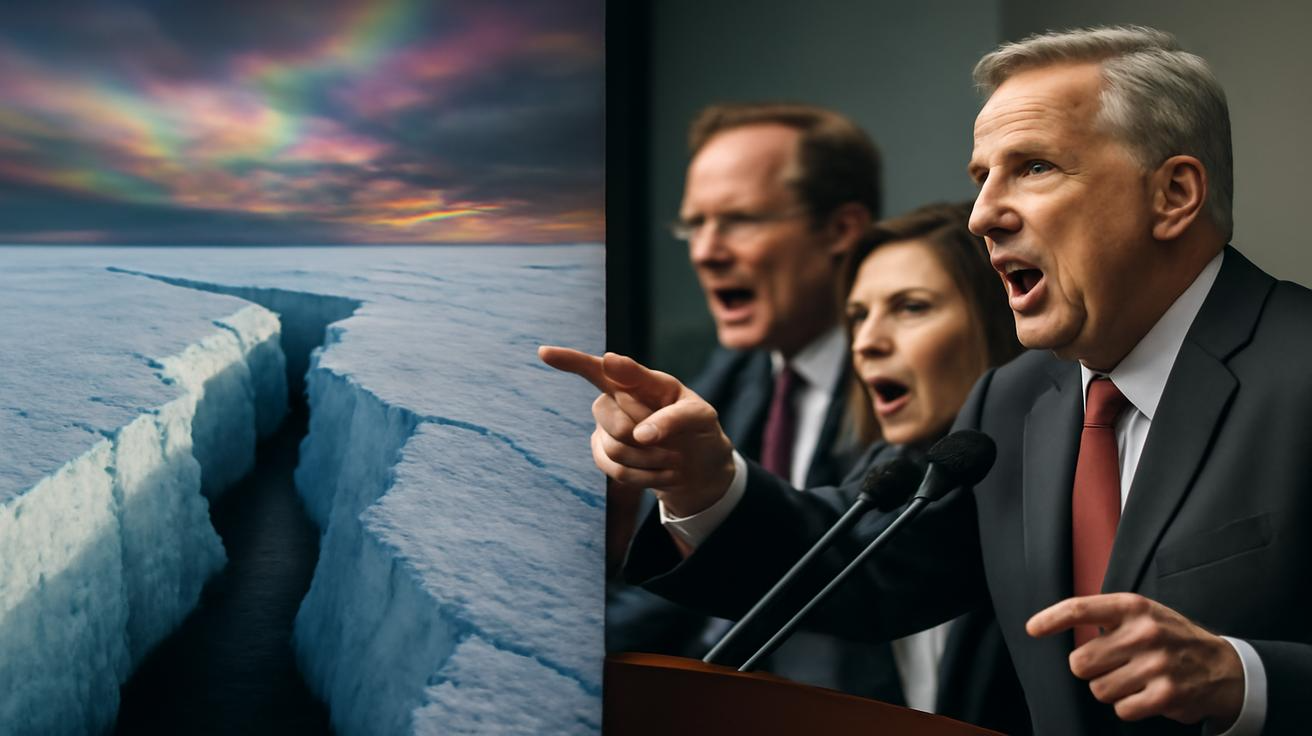
A quiet but significant shift in the Arctic is forcing meteorologists to re-examine some of their most trusted climate forecasting tools. The change didn’t arrive with dramatic headlines or immediate global storms. Instead, it appeared gradually in satellite data, atmospheric pressure readings, and unusual temperature patterns across the far north.
For researchers monitoring the region, the signals became increasingly difficult to ignore. Cold air movements began behaving unpredictably, while warmer, moisture-laden air pushed farther into Arctic zones than expected. The result: a subtle but meaningful rearrangement of the atmospheric balance that shapes weather patterns across the Northern Hemisphere.

Scientists say the shift does not overturn the fundamental understanding of climate change. However, it highlights how complex Arctic systems can influence global weather in ways that are still being refined in modern climate models.
Why the Arctic Matters to Global Weather
The Arctic acts like a thermostat for the planet. Its ice, ocean temperatures, and atmospheric circulation play a crucial role in regulating weather patterns far beyond the polar region.
One of the most important components is the polar vortex—a vast rotating mass of cold air that normally sits over the North Pole. When stable, it helps keep the coldest air confined to high latitudes.

Recent observations suggest this system has become more unstable.
Instead of spinning smoothly, parts of the vortex have weakened or shifted. In some cases, colder air has spilled southward in bursts, while warmer air pushes north into regions that historically stayed frozen for most of the year.
These disruptions can influence storms, temperature swings, and seasonal patterns across North America, Europe, and parts of Asia.
Climate Models Face a New Challenge

Climate models have long predicted a warming planet, melting ice, and changing weather patterns. In many ways, those broad trends remain accurate.
However, the latest Arctic observations suggest that some local feedback mechanisms may be evolving faster or differently than previously expected.
Researchers are focusing on several key areas where models may need improvement.
Sea Ice Dynamics
Multi-year sea ice—thick ice that survives multiple seasons—is shrinking rapidly. As darker ocean water replaces reflective ice, more solar heat is absorbed, accelerating warming and influencing atmospheric circulation.
Jet Stream Behavior
The jet stream, a fast-moving band of air that steers storms, appears increasingly sensitive to Arctic changes. A weaker temperature contrast between the Arctic and lower latitudes may cause the jet stream to slow and develop larger waves.
This can lead to weather systems lingering longer over certain regions, increasing the likelihood of extreme events.
Ocean Heat Storage
Some Arctic waters are acting like thermal reservoirs, absorbing heat during warmer months and releasing it later. These sudden releases of stored heat can disrupt seasonal patterns and atmospheric stability.
What the Data Is Showing
Meteorologists analyze thousands of measurements to understand how the Arctic is evolving. A simplified snapshot of key indicators illustrates the emerging changes.
| Climate Indicator | Previous Arctic Pattern | Emerging Observations |
|---|---|---|
| Sea Ice Extent | Predictable seasonal melting cycles | Faster melt with higher year-to-year variability |
| Polar Vortex | Generally stable circulation | More frequent weakening and splitting events |
| Jet Stream Shape | Straighter and faster flow | Increased waviness and slower movement |
| Temperature Extremes | Within historical variability ranges | Growing number of outlier warm and cold events |
| Forecast Accuracy | Strong seasonal prediction reliability | Reduced accuracy in some regions |
These shifts don’t mean climate science is fundamentally flawed. Instead, they reveal how complex interactions between ice, oceans, and atmospheric currents can amplify changes.
Why Political Debate Is Missing the Point
As news of unusual Arctic behavior spreads, political reactions have been swift. Some commentators claim the unexpected patterns undermine climate science. Others use the changes to push sweeping policy claims before research is fully analyzed.
Scientists caution that both reactions oversimplify the issue.
The broader picture remains consistent: global temperatures are rising, and the Arctic is warming faster than many other regions. What the current shift highlights is how unpredictable some regional effects can be.
Climate research evolves continuously as new data improves models and understanding.
Real-World Implications for Communities
Weather volatility linked to Arctic changes could have practical consequences far from the polar region.
Energy planners must account for sudden cold outbreaks that strain power grids. Farmers may face shifting planting seasons. Coastal areas could experience altered winter storm patterns.
Infrastructure designed around historical climate stability may need adjustments as variability increases.
Planning for this uncertainty is becoming just as important as predicting long-term warming trends.
The Path Forward for Climate Science
Researchers are now working to refine forecasting tools with better Arctic data. New satellite systems, ocean monitoring equipment, and higher-resolution climate models are expected to improve understanding in the coming years.
The goal is not to eliminate uncertainty entirely—something impossible in a system as complex as Earth’s climate—but to narrow the range of surprises.
The Arctic’s evolving behavior is a reminder that climate science is not static. It is an ongoing effort to map a changing planet, using every new observation to sharpen predictions and guide smarter preparation for the future.

  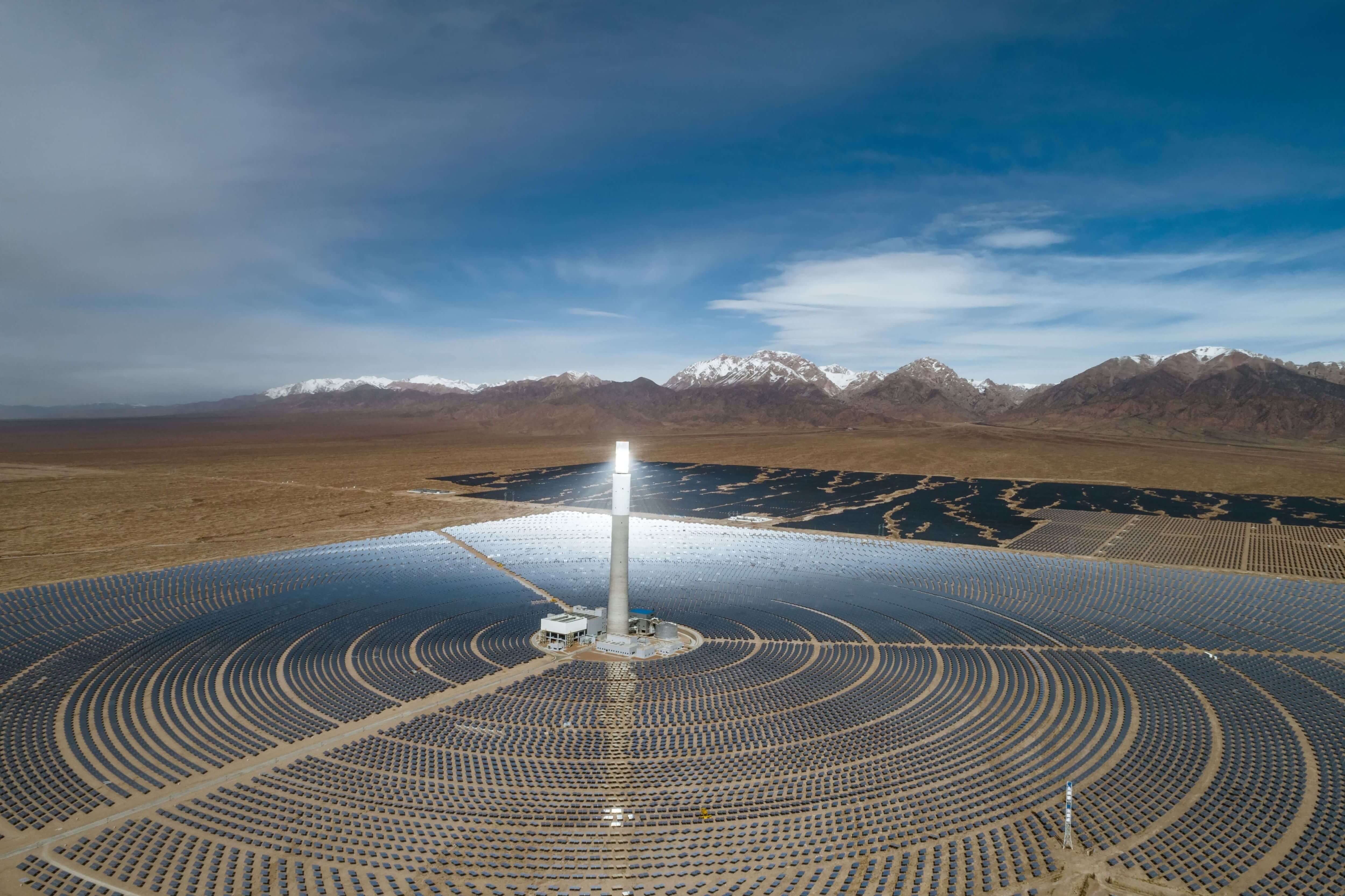 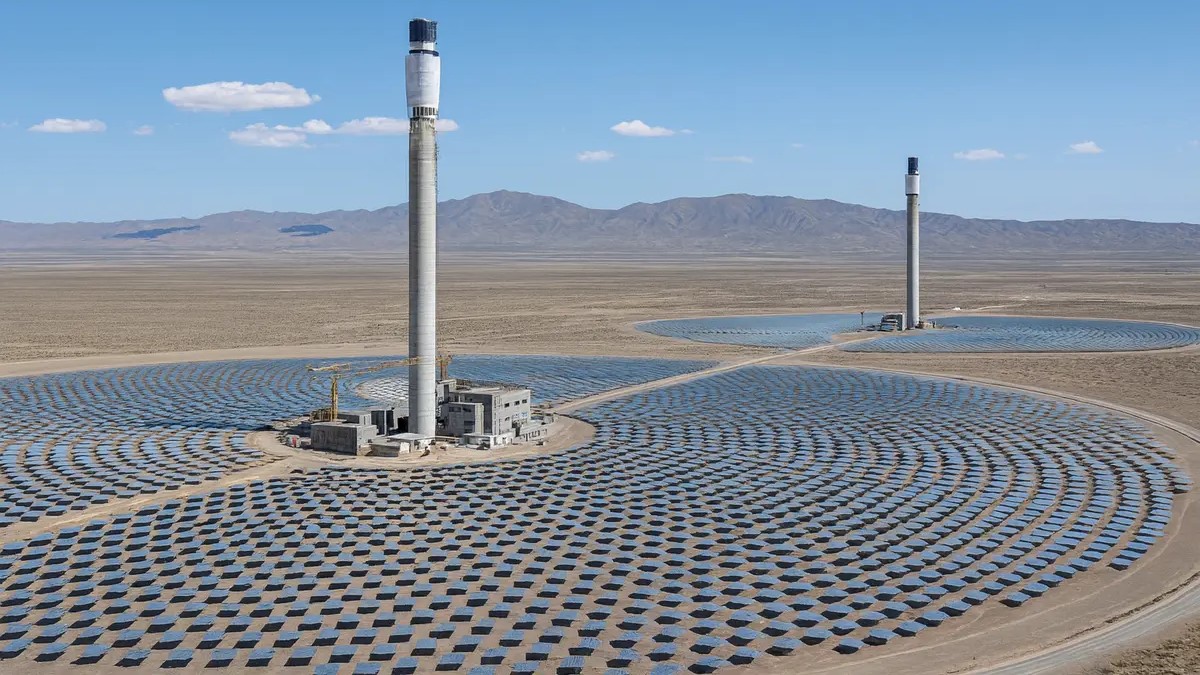 ## Scientists Are Building an “Artificial Sun” in the Desert — And It Could Change How Cities Get Power In a remote desert landscape, something extraordinary is taking shape. Thousands of mirrors stretch across the sand, reflecting sunlight toward a central tower that glows brighter than anything else in sight. Nearby, inside steel chambers and advanced laboratories, scientists are attempting something even more ambitious: recreating the energy process that powers the stars. Researchers and engineers have begun calling the project an **“artificial sun.”** The goal is simple but revolutionary — generate enormous amounts of clean electricity using the same fusion process that fuels the real sun. If successful, this technology could provide nearly unlimited energy for cities while dramatically reducing carbon emissions. ## What Is an Artificial Sun? The term “artificial sun” refers to **nuclear fusion reactors**, experimental machines designed to replicate the reaction happening inside stars. ### How fusion works In the core of the sun, hydrogen atoms collide under extreme heat and pressure. They fuse together to form helium, releasing massive amounts of energy. Scientists are trying to recreate that reaction on Earth. To do this, they: * Heat hydrogen fuel into plasma hotter than the sun’s core * Use powerful magnetic fields to hold the plasma in place * Trigger atomic fusion that releases energy If the process becomes stable and efficient, fusion could provide **clean, abundant electricity with minimal environmental impact.** ## Why the Desert Is the Perfect Location Fusion facilities and large solar energy complexes require huge amounts of space and sunlight. That’s why many experimental projects are being built in desert regions. ### Advantages of desert locations * Up to **300 sunny days per year** * Large open land areas for solar mirror fields * Low population density * Stable ground for heavy infrastructure The desert environment also allows researchers to combine fusion research with **concentrated solar power systems**, creating hybrid energy plants. ## The Role of Giant Mirror Fields One of the most striking features of the facility is the field of heliostats — massive mirrors that follow the sun across the sky. Each mirror reflects sunlight toward a central tower where heat is collected and stored. ### What heliostats do * Concentrate sunlight into extremely high temperatures * Produce steam that spins turbines * Store thermal energy in molten salt tanks * Generate electricity even after sunset This solar system provides immediate renewable power while supporting the experimental fusion infrastructure nearby. ## How the Artificial Sun Could Power Cities The long-term goal is to create power plants that operate around the clock without fossil fuels. Fusion could provide stable electricity regardless of weather conditions, solving one of the biggest challenges facing renewable energy today. ### Potential energy output Component | Purpose | Estimated Impact Solar mirror tower | Daytime renewable electricity | Up to 150,000 homes Fusion test reactors | Experimental constant power | ~50,000 homes in early phases Thermal storage tanks | Nighttime electricity supply | 4–6 hours grid backup Battery systems | Stabilize the grid | Instant response to demand spikes Although these numbers are still projections, the concept shows how multiple technologies could work together to power entire urban areas. ## Why Fusion Energy Is So Important Global electricity demand continues to grow as more systems move toward electrification — from vehicles to heating systems and data centers. Fusion energy offers several advantages compared with traditional power sources. ### Key benefits of fusion power * No greenhouse gas emissions during operation * Fuel derived from hydrogen, one of the most abundant elements * Minimal long-term radioactive waste * No risk of runaway chain reactions Because of these factors, fusion is often described as the **“holy grail of clean energy.”** ## The Biggest Challenges Scientists Still Face Despite decades of research, fusion remains one of the most difficult engineering challenges in modern science. Creating plasma hotter than the sun and controlling it inside a reactor requires incredibly precise technology. ### Major hurdles * Maintaining stable plasma for long periods * Designing materials that survive extreme heat * Scaling experimental reactors into commercial power plants * Reducing costs so electricity becomes affordable Scientists have made major breakthroughs recently, including successful experiments that produced **net energy gain for brief moments**. However, reliable commercial fusion power is still under development. ## Key Takeaways * Scientists are building experimental fusion reactors known as **artificial suns**. * These projects aim to generate massive amounts of clean electricity. * Desert locations provide ideal conditions for solar and fusion infrastructure. * Fusion could eventually deliver constant, low-carbon energy for cities worldwide. While the technology is still evolving, progress is accelerating as governments and private companies invest billions into fusion research. ## Frequently Asked Questions ### What is an artificial sun in energy research? An artificial sun is a nuclear fusion reactor designed to replicate the energy process that powers stars. ### Is fusion energy safer than nuclear power? Fusion generally produces less radioactive waste and cannot trigger runaway chain reactions like traditional nuclear fission plants. ### When will fusion power become widely available? Many experts expect early commercial fusion plants to appear between the **2030s and 2040s**, though timelines remain uncertain. ### Why are fusion experiments built in deserts? Deserts provide strong sunlight, large open land areas, and stable environments for building large energy facilities. ### Could fusion completely replace fossil fuels? Fusion could become a major clean energy source, but it will likely work alongside solar, wind, and other renewable technologies. ## Conclusion For decades, the idea of building a miniature star on Earth sounded like science fiction. Today, that vision is slowly becoming reality in remote deserts where scientists are testing the limits of physics and engineering. The artificial sun projects rising from the sand represent more than an experiment. They represent a new possibility for how humanity powers its future. If fusion energy succeeds, the lights in cities around the world may one day be powered by the same process that makes the stars shine.](https://ozpuff.com.au/wp-content/uploads/2026/03/Scientists-Are-Building-an-Artificial-Sun-in-the-Desert-—-And-It-Could-Change-How-Cities-Get-Power-1024x576.png)