
In the dense forests of Africa, the quiet hum of the jungle is often interrupted by subtle, curious noises: a twig tapped, a small stone rolled, or a puff of breath into a hollow branch. These are not random sounds—they are the early experiments of young chimpanzees exploring their world. While adults lounge in the shade, adhering to established routines, juveniles are busy testing, improvising, and sometimes creating entirely new behaviors. Recent research shows that these small acts of curiosity often lay the foundation for fresh cultural traditions in chimp communities.
How Innovation Emerges from Play
Take the example of a young chimp, let’s call her Nala. While adults crack hard palm nuts using heavy stones, Nala picks up a tiny pebble and begins tapping. Initially, the effort seems futile. But through experimentation—adjusting angles, switching hands, wedging the nut against a root—she discovers a rudimentary way to crack it. Other juveniles watch and start mimicking her attempts, forming a small circle of observers and experimenters. What starts as play can spark a new tradition that, over time, might be refined and adopted by the wider community.
| Age Group | Typical Behavior with Tools & Traditions | Role in Cultural Change |
|---|---|---|
| Infants (0–3 years) | Observing, clumsy object interaction | Absorb early impressions for future learning |
| Juveniles (3–7 years) | Frequent play, tool experimentation | Most likely to invent new behaviors |
| Adolescents (7–12 years) | Refining skills, blending play with adult tasks | Spread innovations among peers |
| Adults (>12 years) | Use established, efficient methods | Stabilize successful behaviors into tradition |
Rethinking the Flow of Culture

For decades, scientists assumed that culture flowed top-down: older, experienced individuals teaching the young. Adult chimpanzees were thought to be the primary source of knowledge, demonstrating survival techniques and tool use. But field observations reveal a more dynamic picture. Young chimps often initiate change, experimenting with tools and social behaviors in ways adults rarely attempt. Risk-taking, curiosity, and play are strongest in youth, making juveniles natural innovators in the forest.
Play as a Laboratory for Innovation
To human eyes, juvenile chimp play may look chaotic—tumbling, shrieking, and manipulating objects. But these moments are crucial learning labs. A stick can become a drum, lever, or mock spear; leaves can transform from bedding to props in a game. Many experiments fade, but some behaviors catch on, copied by peers and eventually even by adults. Through repetition and social reinforcement, these small experiments evolve into stable traditions.
The Balance Between Experimentation and Stability
Chimpanzee culture relies on a balance: innovation from youth and conservatism from adults. If every young chimp introduced every new behavior, traditions would never solidify. Conversely, if adults rigidly followed old methods, communities might fail to adapt. Adults act as cultural gatekeepers, adopting innovations that are useful or socially rewarding. This interplay ensures that chimp culture remains flexible yet stable, capable of evolving without losing cohesion.
Implications for Understanding Animal Intelligence

Recognizing that juveniles often drive cultural innovation reshapes our understanding of learning in animals. Chimpanzees are not merely recipients of tradition—they actively shape it. Play, curiosity, and experimentation are engines of social evolution. These insights also shed light on human culture: the creativity and rule-bending of youth may mirror a deep evolutionary pattern, where young minds, both human and chimpanzee, drive cultural change.
In essence, the smallest, most playful members of a chimpanzee community are quietly redesigning their world. Their curiosity, experimentation, and mischief ensure that traditions evolve, making youth a vital force in both survival and cultural continuity.

  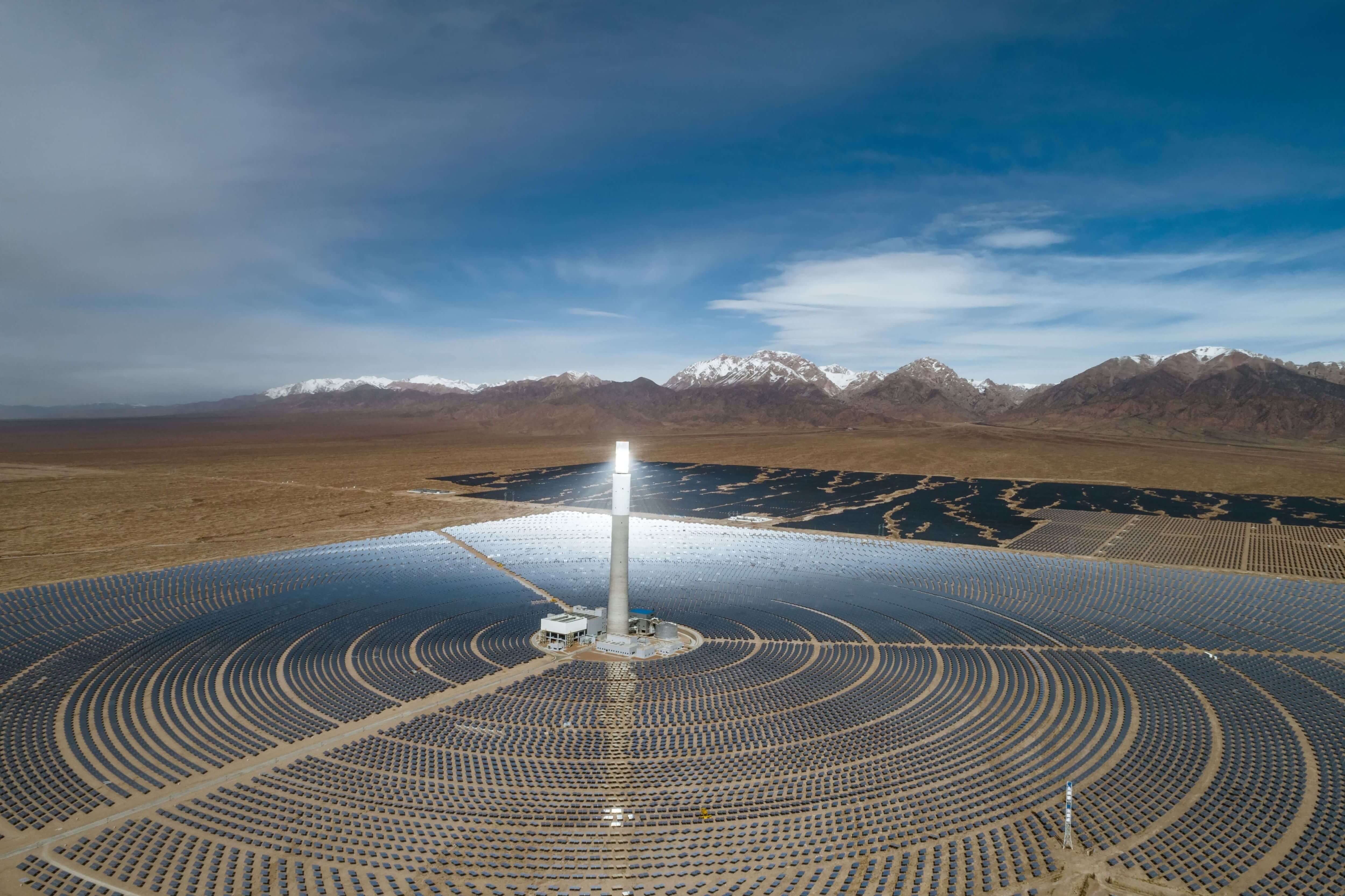 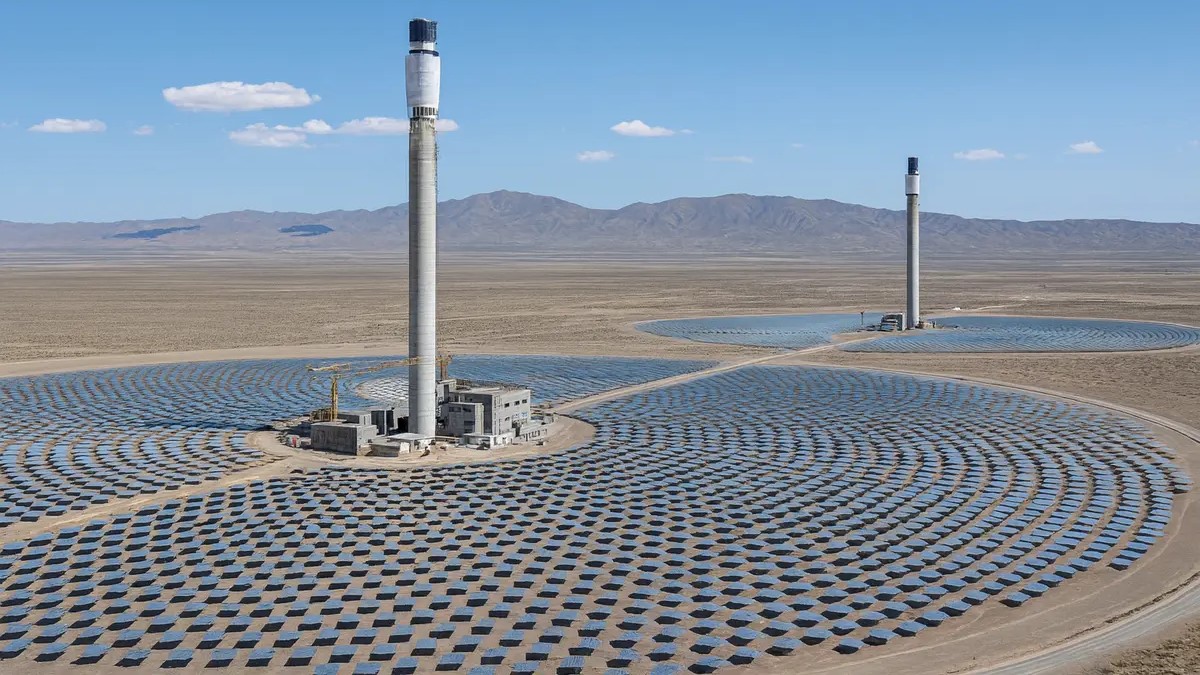 ## Scientists Are Building an “Artificial Sun” in the Desert — And It Could Change How Cities Get Power In a remote desert landscape, something extraordinary is taking shape. Thousands of mirrors stretch across the sand, reflecting sunlight toward a central tower that glows brighter than anything else in sight. Nearby, inside steel chambers and advanced laboratories, scientists are attempting something even more ambitious: recreating the energy process that powers the stars. Researchers and engineers have begun calling the project an **“artificial sun.”** The goal is simple but revolutionary — generate enormous amounts of clean electricity using the same fusion process that fuels the real sun. If successful, this technology could provide nearly unlimited energy for cities while dramatically reducing carbon emissions. ## What Is an Artificial Sun? The term “artificial sun” refers to **nuclear fusion reactors**, experimental machines designed to replicate the reaction happening inside stars. ### How fusion works In the core of the sun, hydrogen atoms collide under extreme heat and pressure. They fuse together to form helium, releasing massive amounts of energy. Scientists are trying to recreate that reaction on Earth. To do this, they: * Heat hydrogen fuel into plasma hotter than the sun’s core * Use powerful magnetic fields to hold the plasma in place * Trigger atomic fusion that releases energy If the process becomes stable and efficient, fusion could provide **clean, abundant electricity with minimal environmental impact.** ## Why the Desert Is the Perfect Location Fusion facilities and large solar energy complexes require huge amounts of space and sunlight. That’s why many experimental projects are being built in desert regions. ### Advantages of desert locations * Up to **300 sunny days per year** * Large open land areas for solar mirror fields * Low population density * Stable ground for heavy infrastructure The desert environment also allows researchers to combine fusion research with **concentrated solar power systems**, creating hybrid energy plants. ## The Role of Giant Mirror Fields One of the most striking features of the facility is the field of heliostats — massive mirrors that follow the sun across the sky. Each mirror reflects sunlight toward a central tower where heat is collected and stored. ### What heliostats do * Concentrate sunlight into extremely high temperatures * Produce steam that spins turbines * Store thermal energy in molten salt tanks * Generate electricity even after sunset This solar system provides immediate renewable power while supporting the experimental fusion infrastructure nearby. ## How the Artificial Sun Could Power Cities The long-term goal is to create power plants that operate around the clock without fossil fuels. Fusion could provide stable electricity regardless of weather conditions, solving one of the biggest challenges facing renewable energy today. ### Potential energy output Component | Purpose | Estimated Impact Solar mirror tower | Daytime renewable electricity | Up to 150,000 homes Fusion test reactors | Experimental constant power | ~50,000 homes in early phases Thermal storage tanks | Nighttime electricity supply | 4–6 hours grid backup Battery systems | Stabilize the grid | Instant response to demand spikes Although these numbers are still projections, the concept shows how multiple technologies could work together to power entire urban areas. ## Why Fusion Energy Is So Important Global electricity demand continues to grow as more systems move toward electrification — from vehicles to heating systems and data centers. Fusion energy offers several advantages compared with traditional power sources. ### Key benefits of fusion power * No greenhouse gas emissions during operation * Fuel derived from hydrogen, one of the most abundant elements * Minimal long-term radioactive waste * No risk of runaway chain reactions Because of these factors, fusion is often described as the **“holy grail of clean energy.”** ## The Biggest Challenges Scientists Still Face Despite decades of research, fusion remains one of the most difficult engineering challenges in modern science. Creating plasma hotter than the sun and controlling it inside a reactor requires incredibly precise technology. ### Major hurdles * Maintaining stable plasma for long periods * Designing materials that survive extreme heat * Scaling experimental reactors into commercial power plants * Reducing costs so electricity becomes affordable Scientists have made major breakthroughs recently, including successful experiments that produced **net energy gain for brief moments**. However, reliable commercial fusion power is still under development. ## Key Takeaways * Scientists are building experimental fusion reactors known as **artificial suns**. * These projects aim to generate massive amounts of clean electricity. * Desert locations provide ideal conditions for solar and fusion infrastructure. * Fusion could eventually deliver constant, low-carbon energy for cities worldwide. While the technology is still evolving, progress is accelerating as governments and private companies invest billions into fusion research. ## Frequently Asked Questions ### What is an artificial sun in energy research? An artificial sun is a nuclear fusion reactor designed to replicate the energy process that powers stars. ### Is fusion energy safer than nuclear power? Fusion generally produces less radioactive waste and cannot trigger runaway chain reactions like traditional nuclear fission plants. ### When will fusion power become widely available? Many experts expect early commercial fusion plants to appear between the **2030s and 2040s**, though timelines remain uncertain. ### Why are fusion experiments built in deserts? Deserts provide strong sunlight, large open land areas, and stable environments for building large energy facilities. ### Could fusion completely replace fossil fuels? Fusion could become a major clean energy source, but it will likely work alongside solar, wind, and other renewable technologies. ## Conclusion For decades, the idea of building a miniature star on Earth sounded like science fiction. Today, that vision is slowly becoming reality in remote deserts where scientists are testing the limits of physics and engineering. The artificial sun projects rising from the sand represent more than an experiment. They represent a new possibility for how humanity powers its future. If fusion energy succeeds, the lights in cities around the world may one day be powered by the same process that makes the stars shine.](https://ozpuff.com.au/wp-content/uploads/2026/03/Scientists-Are-Building-an-Artificial-Sun-in-the-Desert-—-And-It-Could-Change-How-Cities-Get-Power-1024x576.png)