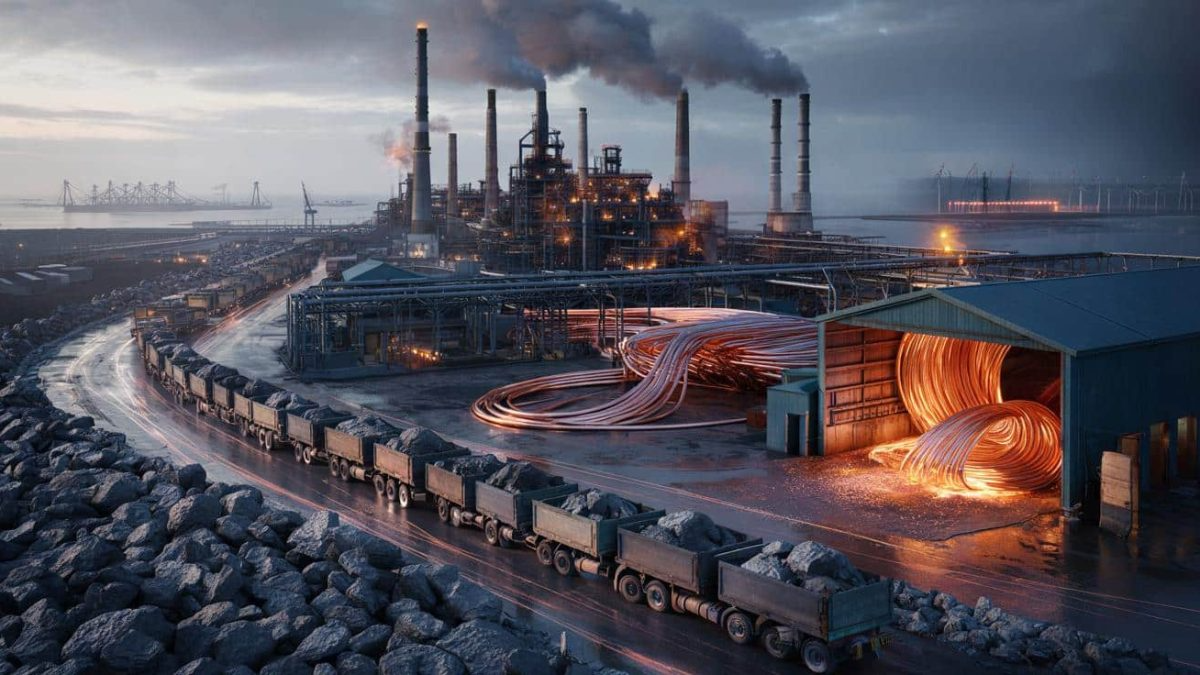
China’s influence over rare earths is well-known, but its dominance in copper refining has quietly become a critical factor in global supply chains. While countries like Chile and Peru lead in raw copper production, most of their mined ore ends up in China for processing. By controlling more than half of the world’s refined copper, China has inserted itself at the heart of industries ranging from electric vehicles to renewable energy.
This hidden leverage is increasingly relevant as global demand for copper surges. Supply chain planners, manufacturers, and policymakers are beginning to realize that any disruption in Chinese refining capacity could ripple across economies, affecting infrastructure projects, vehicle production, and electronics manufacturing.
How China Built Its Refining Empire

China’s rise in copper refining was strategic. Starting in the early 2000s, the government prioritized refining as a key industry. State-owned and private enterprises received incentives including capital, energy subsidies, and streamlined permits. Investments focused on modernizing smelters and implementing advanced refining technology.
By 2010, China accounted for roughly 40% of global refined copper capacity; today, estimates place that figure above 50%. Unlike rare earths, China’s advantage isn’t in raw resources—it’s in infrastructure, industrial scale, and operational efficiency. Subsidized energy and lower labor costs allowed Chinese refineries to maintain margins even during price fluctuations, outpacing competitors in Europe, North America, and South America.
Refining Capacity at a Glance
| Country | Refining Capacity (Million Tonnes/Year) | Market Share (%) | Key Refineries |
|---|---|---|---|
| China | 10.5 | 52 | 25+ |
| Japan | 1.8 | 9 | 8 |
| Belgium | 0.9 | 4.5 | 3 |
| Russia | 1.2 | 6 | 5 |
| USA | 1.4 | 7 | 6 |
| Others | 3.2 | 16 | 20+ |
China’s output dwarfs all other countries combined. Its geographic advantage—refineries clustered near ports and industrial hubs—enables rapid processing and efficient shipment to domestic and international markets.
Why Alternatives Struggle

Mining giants like Chile and Peru produce nearly 40% of global copper but face obstacles in developing domestic refining. Environmental regulations, high labor costs, limited water, and electricity constraints make large-scale refineries economically challenging. Africa’s emerging producers, including the Democratic Republic of Congo and Zambia, also lack domestic infrastructure, though Chinese companies are expanding operations there, further extending Beijing’s control.
Even initiatives in India and Southeast Asia have failed to match Chinese scale and efficiency. Western countries face prohibitive costs in labor, energy, and environmental compliance, making rapid decoupling from Chinese refining impractical without major subsidies or trade policies.
Strategic and Economic Implications
Copper is central to modern infrastructure. Construction, transportation, renewable energy, and electronics all rely heavily on refined copper.
| Sector | Global Consumption (%) | 5-Year Growth | China’s Role |
|---|---|---|---|
| Construction & Infrastructure | 35 | 3.2% | Processor & primary user |
| Electrical Power | 28 | 4.1% | Processor & primary user |
| Transportation | 18 | 6.8% | Processor & primary user |
| Industrial Equipment | 12 | 2.5% | Processor & exporter |
| Consumer Electronics | 7 | 5.3% | Processor & primary user |

A disruption in Chinese refining—even partial—would spike global copper prices, constrain manufacturing, and slow infrastructure development. Strategic reserves are minimal outside China, leaving economies vulnerable to price swings and supply bottlenecks.
Environmental and Policy Considerations
China bears significant environmental costs for its refining sector, including sulfur dioxide emissions and high water usage. Western nations largely abandoned domestic refining due to stricter environmental regulations. This outsourcing of industrial impact has reinforced China’s structural advantage but also creates political vulnerability: stricter enforcement or environmental incidents could reduce output, affecting global supply.
Policy options for Western governments include maintaining strategic copper reserves, subsidizing allied refining capacity, incentivizing recycling, or reducing copper demand through technology and efficiency gains. Each comes with trade-offs, and no solution is simple or inexpensive.
Conclusion
China’s dominance in copper refining is no longer a niche industrial story—it’s a global strategic reality. Its combination of scale, technology, and cost advantage ensures a central role in industries that power the modern economy. As demand for copper grows with electrification and infrastructure expansion, dependence on Chinese refining will remain a critical factor shaping markets, supply chains, and policy decisions worldwide.

  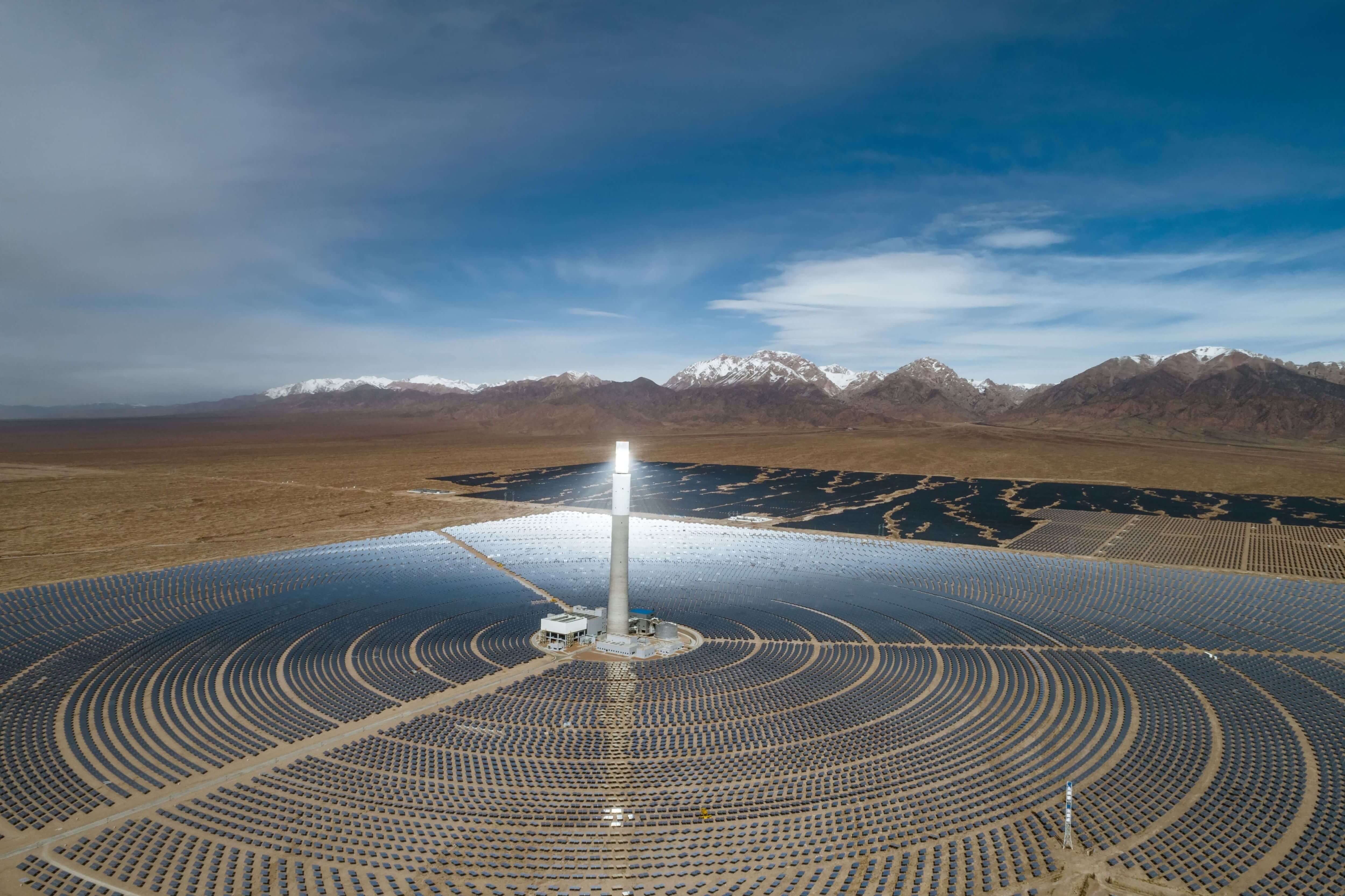 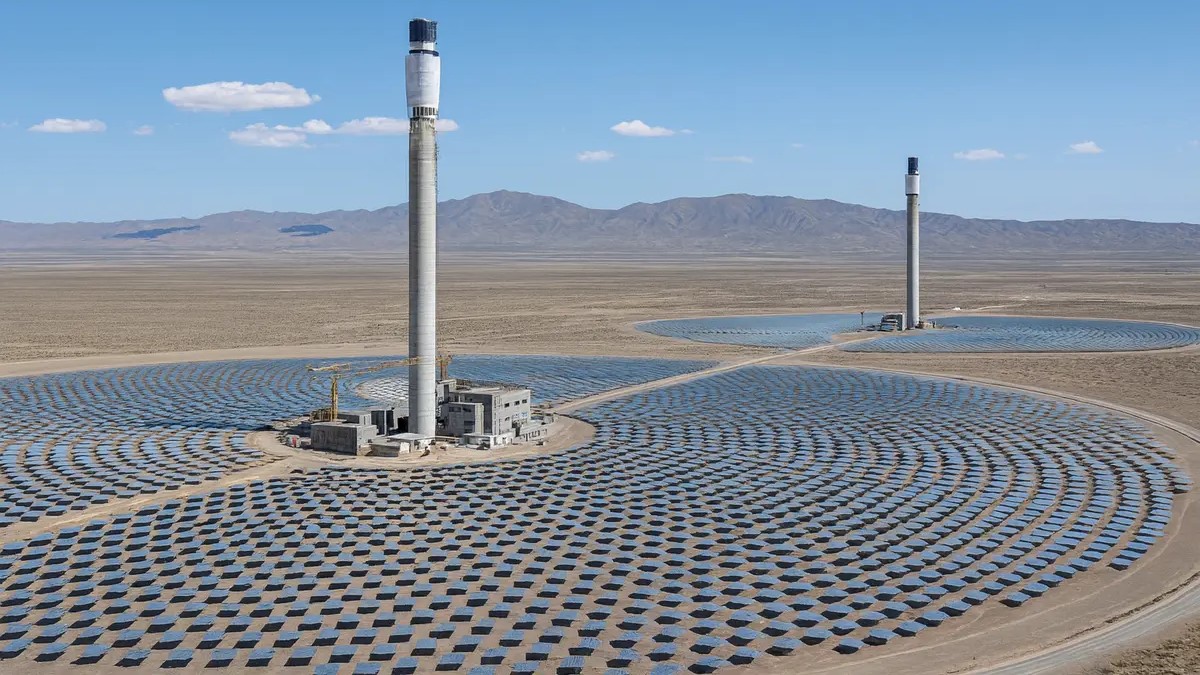 ## Scientists Are Building an “Artificial Sun” in the Desert — And It Could Change How Cities Get Power In a remote desert landscape, something extraordinary is taking shape. Thousands of mirrors stretch across the sand, reflecting sunlight toward a central tower that glows brighter than anything else in sight. Nearby, inside steel chambers and advanced laboratories, scientists are attempting something even more ambitious: recreating the energy process that powers the stars. Researchers and engineers have begun calling the project an **“artificial sun.”** The goal is simple but revolutionary — generate enormous amounts of clean electricity using the same fusion process that fuels the real sun. If successful, this technology could provide nearly unlimited energy for cities while dramatically reducing carbon emissions. ## What Is an Artificial Sun? The term “artificial sun” refers to **nuclear fusion reactors**, experimental machines designed to replicate the reaction happening inside stars. ### How fusion works In the core of the sun, hydrogen atoms collide under extreme heat and pressure. They fuse together to form helium, releasing massive amounts of energy. Scientists are trying to recreate that reaction on Earth. To do this, they: * Heat hydrogen fuel into plasma hotter than the sun’s core * Use powerful magnetic fields to hold the plasma in place * Trigger atomic fusion that releases energy If the process becomes stable and efficient, fusion could provide **clean, abundant electricity with minimal environmental impact.** ## Why the Desert Is the Perfect Location Fusion facilities and large solar energy complexes require huge amounts of space and sunlight. That’s why many experimental projects are being built in desert regions. ### Advantages of desert locations * Up to **300 sunny days per year** * Large open land areas for solar mirror fields * Low population density * Stable ground for heavy infrastructure The desert environment also allows researchers to combine fusion research with **concentrated solar power systems**, creating hybrid energy plants. ## The Role of Giant Mirror Fields One of the most striking features of the facility is the field of heliostats — massive mirrors that follow the sun across the sky. Each mirror reflects sunlight toward a central tower where heat is collected and stored. ### What heliostats do * Concentrate sunlight into extremely high temperatures * Produce steam that spins turbines * Store thermal energy in molten salt tanks * Generate electricity even after sunset This solar system provides immediate renewable power while supporting the experimental fusion infrastructure nearby. ## How the Artificial Sun Could Power Cities The long-term goal is to create power plants that operate around the clock without fossil fuels. Fusion could provide stable electricity regardless of weather conditions, solving one of the biggest challenges facing renewable energy today. ### Potential energy output Component | Purpose | Estimated Impact Solar mirror tower | Daytime renewable electricity | Up to 150,000 homes Fusion test reactors | Experimental constant power | ~50,000 homes in early phases Thermal storage tanks | Nighttime electricity supply | 4–6 hours grid backup Battery systems | Stabilize the grid | Instant response to demand spikes Although these numbers are still projections, the concept shows how multiple technologies could work together to power entire urban areas. ## Why Fusion Energy Is So Important Global electricity demand continues to grow as more systems move toward electrification — from vehicles to heating systems and data centers. Fusion energy offers several advantages compared with traditional power sources. ### Key benefits of fusion power * No greenhouse gas emissions during operation * Fuel derived from hydrogen, one of the most abundant elements * Minimal long-term radioactive waste * No risk of runaway chain reactions Because of these factors, fusion is often described as the **“holy grail of clean energy.”** ## The Biggest Challenges Scientists Still Face Despite decades of research, fusion remains one of the most difficult engineering challenges in modern science. Creating plasma hotter than the sun and controlling it inside a reactor requires incredibly precise technology. ### Major hurdles * Maintaining stable plasma for long periods * Designing materials that survive extreme heat * Scaling experimental reactors into commercial power plants * Reducing costs so electricity becomes affordable Scientists have made major breakthroughs recently, including successful experiments that produced **net energy gain for brief moments**. However, reliable commercial fusion power is still under development. ## Key Takeaways * Scientists are building experimental fusion reactors known as **artificial suns**. * These projects aim to generate massive amounts of clean electricity. * Desert locations provide ideal conditions for solar and fusion infrastructure. * Fusion could eventually deliver constant, low-carbon energy for cities worldwide. While the technology is still evolving, progress is accelerating as governments and private companies invest billions into fusion research. ## Frequently Asked Questions ### What is an artificial sun in energy research? An artificial sun is a nuclear fusion reactor designed to replicate the energy process that powers stars. ### Is fusion energy safer than nuclear power? Fusion generally produces less radioactive waste and cannot trigger runaway chain reactions like traditional nuclear fission plants. ### When will fusion power become widely available? Many experts expect early commercial fusion plants to appear between the **2030s and 2040s**, though timelines remain uncertain. ### Why are fusion experiments built in deserts? Deserts provide strong sunlight, large open land areas, and stable environments for building large energy facilities. ### Could fusion completely replace fossil fuels? Fusion could become a major clean energy source, but it will likely work alongside solar, wind, and other renewable technologies. ## Conclusion For decades, the idea of building a miniature star on Earth sounded like science fiction. Today, that vision is slowly becoming reality in remote deserts where scientists are testing the limits of physics and engineering. The artificial sun projects rising from the sand represent more than an experiment. They represent a new possibility for how humanity powers its future. If fusion energy succeeds, the lights in cities around the world may one day be powered by the same process that makes the stars shine.](https://ozpuff.com.au/wp-content/uploads/2026/03/Scientists-Are-Building-an-Artificial-Sun-in-the-Desert-—-And-It-Could-Change-How-Cities-Get-Power-1024x576.png)