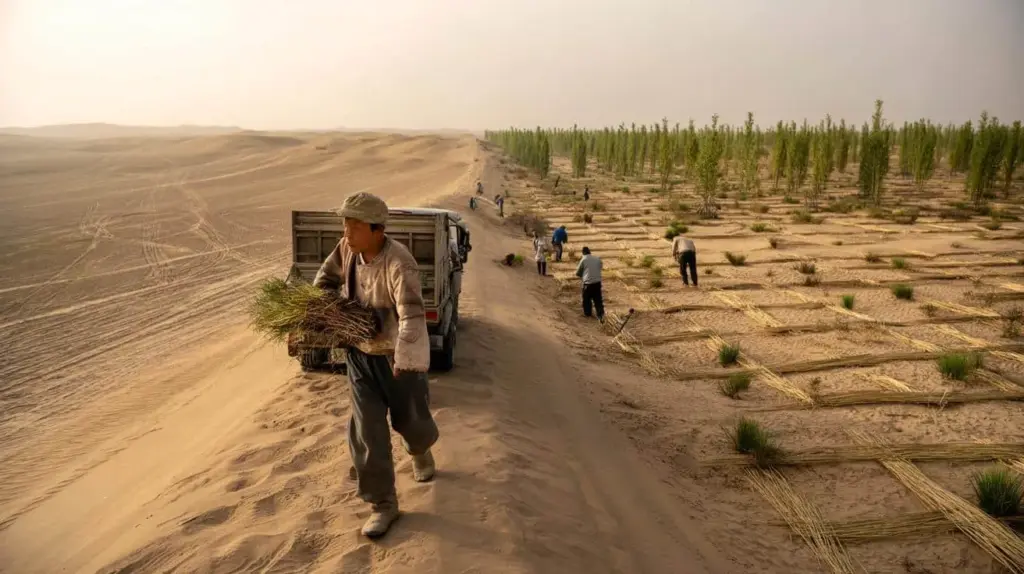
What if a country could reclaim land lost to desert expansion? For decades, northern China faced a growing environmental crisis as the Gobi Desert expanded southward, threatening farmland, cities, and rural communities.
In response, China launched one of the largest environmental restoration programs in history. Since the 1990s, the country has planted over one billion trees, helping slow desertification and restore degraded land across vast regions.

Today, the project is widely recognized as one of the most ambitious reforestation efforts ever attempted, offering valuable lessons for global climate action and land restoration.
The Desert Crisis That Forced Action
By the 1980s and early 1990s, desertification had become a serious national challenge in northern China.
Major impacts included:

• Rapid expansion of the Gobi Desert
• Loss of farmland and grasslands
• Dust storms affecting major cities
• Rural population displacement
Dust storms from desert regions frequently traveled thousands of kilometers, sometimes reaching cities like Beijing, Seoul, and Tokyo.
Main Causes of Desert Expansion
The desertification crisis developed due to several factors:

• Overgrazing of livestock
• Excessive logging
• Climate change and drought
• Unsustainable farming practices
Without intervention, millions of hectares of productive land were at risk.
China’s Three Major Reforestation Programs
China tackled the problem through three large-scale environmental initiatives designed to restore vegetation and protect soil.
1. Three-North Shelterbelt Project
Launched in 1978, this massive project created forest belts across northern China to block desert winds and stabilize soil.
2. Grain for Green Program
Started in 1999, this program encouraged farmers to convert fragile cropland back into forests or grasslands.
Farmers received financial incentives and grain subsidies to participate.
3. Natural Forest Protection Program
Introduced in 1998, this initiative restricted logging and allowed existing forests to regenerate naturally.
| Program | Start Year | Purpose | Impact |
|---|---|---|---|
| Three-North Shelterbelt | 1978 | Create windbreak forests | Stabilized large desert areas |
| Grain for Green | 1999 | Convert farmland to forests | Millions of hectares restored |
| Natural Forest Protection | 1998 | Prevent deforestation | Preserved natural ecosystems |
Together, these programs created a comprehensive strategy to combat desertification.
The Massive Scale of the Project
The size of China’s tree-planting campaign is extraordinary.
Key statistics include:
• 1.2 billion trees planted
• 66 million hectares reforested
• Restoration area comparable to the size of France
Most planting occurred in regions heavily affected by desertification:
• Inner Mongolia
• Ningxia
• Shaanxi
• Gansu
Government funding, local participation, and international collaboration all contributed to the program’s success.
Environmental Improvements from Reforestation
Satellite imagery and environmental data show clear improvements over the past decades.
| Environmental Indicator | 1990s | Today | Change |
|---|---|---|---|
| Desert expansion rate | 3,600 km² annually | Under 500 km² | Major reduction |
| Severe dust storms in Beijing | 10–15 per year | 2–5 per year | ~65% decrease |
| Forest coverage | 3–5% | 15–25% | Significant growth |
| Soil erosion | Very high | Reduced by up to 90% | Major improvement |
The rate of desert expansion has dropped dramatically, and some regions now show net forest growth.
Challenges Faced During the Project
Despite its success, the project faced several challenges.
Tree Survival Problems
Early planting efforts saw high tree mortality due to:
• Harsh desert conditions
• Water shortages
• Poor species selection
Over time, scientists improved survival rates by using native drought-resistant species.
Community Resistance
Some farmers were reluctant to convert farmland to forests, fearing income loss. Incentive programs helped overcome this resistance.
Climate Variability
Drought and unpredictable rainfall sometimes damaged newly planted forests. Adaptive planting strategies helped reduce these risks.
Economic and Social Benefits
Beyond environmental restoration, the reforestation program created significant economic benefits.
Rural Job Creation
Tree planting and forest management created hundreds of thousands of jobs in rural areas.
Improved Agriculture
Windbreak forests helped protect crops and improve soil quality, increasing farm productivity.
Tourism Development
Restored landscapes began attracting eco-tourism, providing new income opportunities for rural communities.
Public Health Improvements
Reduced dust storms improved air quality and lowered respiratory illness rates in many cities.
Global Recognition and Climate Impact
China’s reforestation program has gained international recognition as a model for combating desertification.
Benefits include:
• Major carbon dioxide absorption
• Improved biodiversity in restored regions
• Inspiration for similar projects worldwide
The United Nations and global environmental organizations frequently cite the project as a successful example of large-scale land restoration.
Future Plans for Forest Restoration
China is now focusing on improving forest quality and ecosystem diversity rather than simply planting more trees.
Future goals include:
• Mixed forests with native species
• Better climate resilience
• Advanced monitoring using satellites and drones
• Restoration of entire ecosystems including grasslands and wetlands
The long-term aim is to build self-sustaining natural landscapes.
Conclusion
China’s billion-tree reforestation effort shows that environmental damage can be reversed with sustained commitment and strategic planning.
By planting more than one billion trees, the country has slowed desert expansion, improved air quality, restored degraded land, and strengthened rural economies.
The project proves that large-scale ecological restoration is possible when governments, scientists, and communities work together toward a common goal.
FAQs
1. How many trees has China planted to fight desertification?
China has planted over 1.2 billion trees since the 1990s through national reforestation programs.
2. Has the Gobi Desert stopped expanding?
Expansion has slowed significantly, with desert growth dropping by about 86% compared to earlier decades.
3. What is the Three-North Shelterbelt Project?
It is a massive forest belt project designed to block desert winds and stabilize soil across northern China.
4. Which regions benefited most from the program?
Inner Mongolia, Ningxia, Shaanxi, and Gansu saw major improvements.
5. How does tree planting help the climate?
Trees absorb carbon dioxide, improve soil health, and reduce dust storms, contributing to climate protection.

  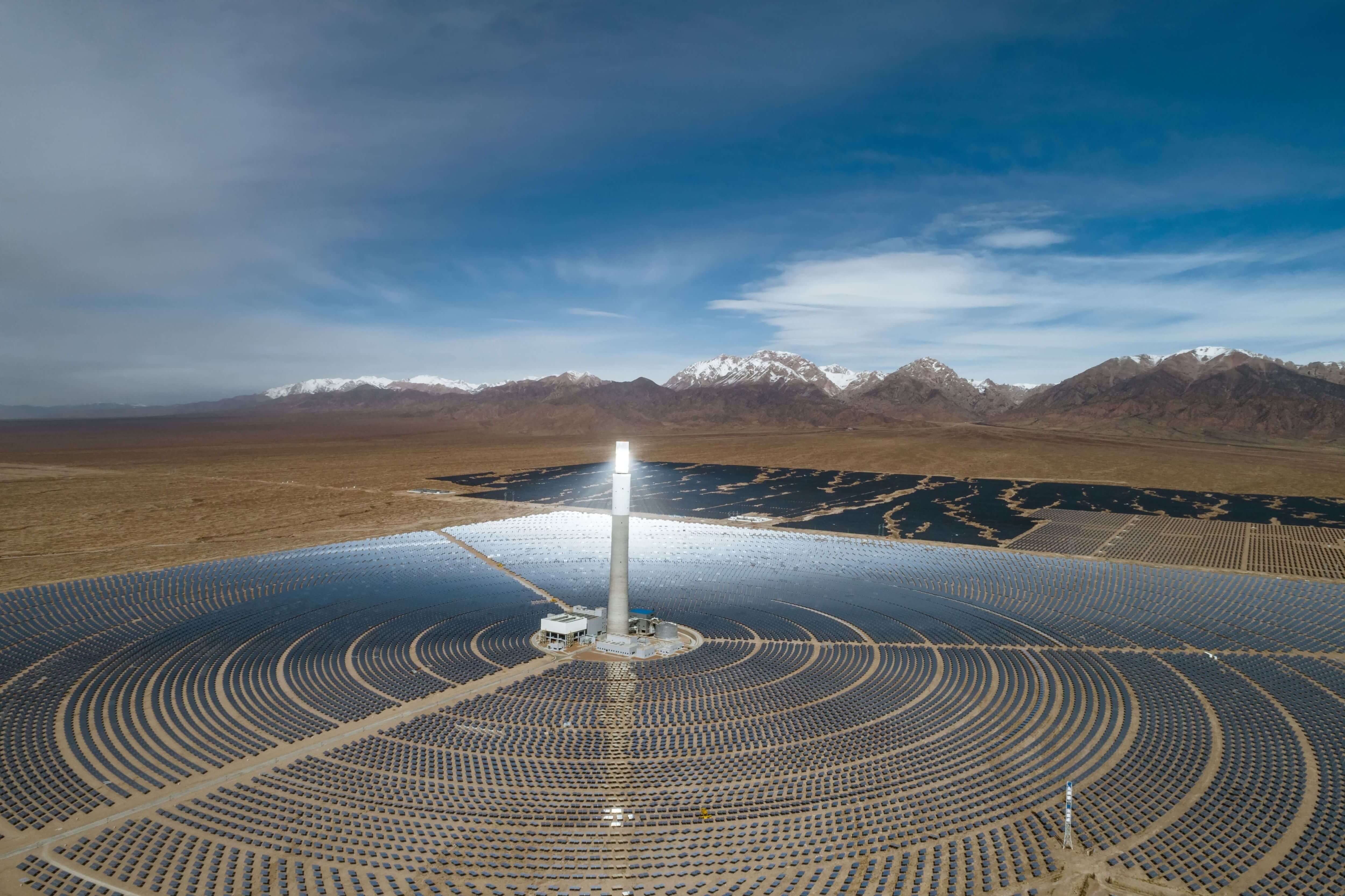 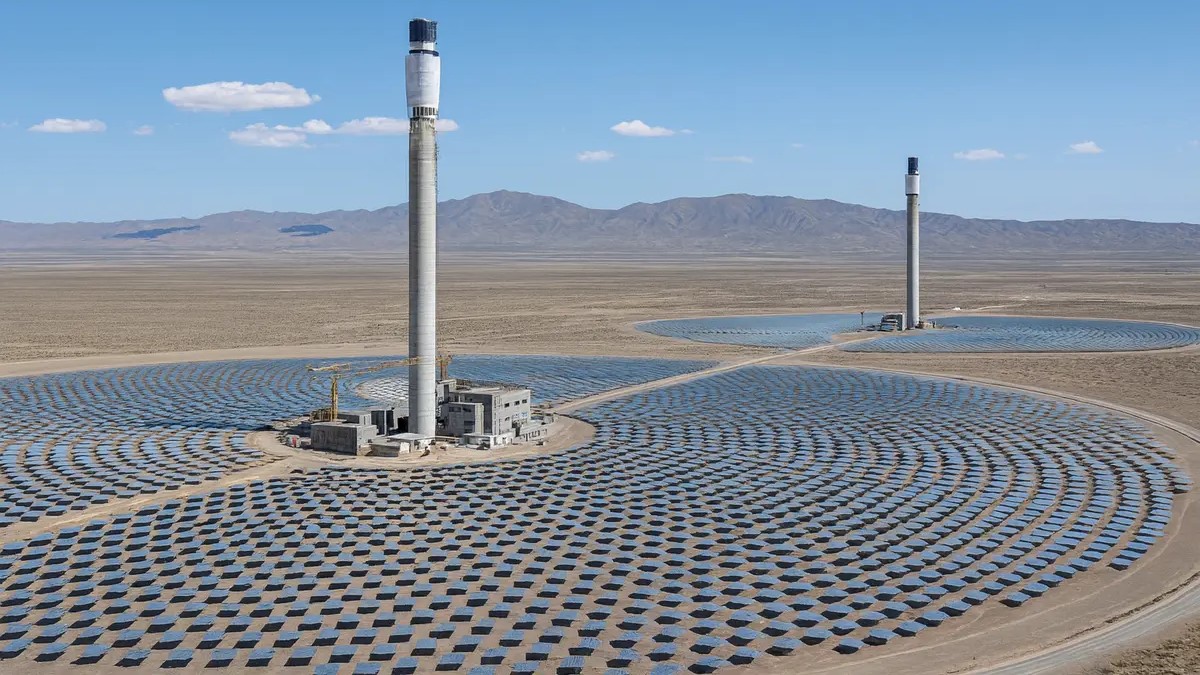 ## Scientists Are Building an “Artificial Sun” in the Desert — And It Could Change How Cities Get Power In a remote desert landscape, something extraordinary is taking shape. Thousands of mirrors stretch across the sand, reflecting sunlight toward a central tower that glows brighter than anything else in sight. Nearby, inside steel chambers and advanced laboratories, scientists are attempting something even more ambitious: recreating the energy process that powers the stars. Researchers and engineers have begun calling the project an **“artificial sun.”** The goal is simple but revolutionary — generate enormous amounts of clean electricity using the same fusion process that fuels the real sun. If successful, this technology could provide nearly unlimited energy for cities while dramatically reducing carbon emissions. ## What Is an Artificial Sun? The term “artificial sun” refers to **nuclear fusion reactors**, experimental machines designed to replicate the reaction happening inside stars. ### How fusion works In the core of the sun, hydrogen atoms collide under extreme heat and pressure. They fuse together to form helium, releasing massive amounts of energy. Scientists are trying to recreate that reaction on Earth. To do this, they: * Heat hydrogen fuel into plasma hotter than the sun’s core * Use powerful magnetic fields to hold the plasma in place * Trigger atomic fusion that releases energy If the process becomes stable and efficient, fusion could provide **clean, abundant electricity with minimal environmental impact.** ## Why the Desert Is the Perfect Location Fusion facilities and large solar energy complexes require huge amounts of space and sunlight. That’s why many experimental projects are being built in desert regions. ### Advantages of desert locations * Up to **300 sunny days per year** * Large open land areas for solar mirror fields * Low population density * Stable ground for heavy infrastructure The desert environment also allows researchers to combine fusion research with **concentrated solar power systems**, creating hybrid energy plants. ## The Role of Giant Mirror Fields One of the most striking features of the facility is the field of heliostats — massive mirrors that follow the sun across the sky. Each mirror reflects sunlight toward a central tower where heat is collected and stored. ### What heliostats do * Concentrate sunlight into extremely high temperatures * Produce steam that spins turbines * Store thermal energy in molten salt tanks * Generate electricity even after sunset This solar system provides immediate renewable power while supporting the experimental fusion infrastructure nearby. ## How the Artificial Sun Could Power Cities The long-term goal is to create power plants that operate around the clock without fossil fuels. Fusion could provide stable electricity regardless of weather conditions, solving one of the biggest challenges facing renewable energy today. ### Potential energy output Component | Purpose | Estimated Impact Solar mirror tower | Daytime renewable electricity | Up to 150,000 homes Fusion test reactors | Experimental constant power | ~50,000 homes in early phases Thermal storage tanks | Nighttime electricity supply | 4–6 hours grid backup Battery systems | Stabilize the grid | Instant response to demand spikes Although these numbers are still projections, the concept shows how multiple technologies could work together to power entire urban areas. ## Why Fusion Energy Is So Important Global electricity demand continues to grow as more systems move toward electrification — from vehicles to heating systems and data centers. Fusion energy offers several advantages compared with traditional power sources. ### Key benefits of fusion power * No greenhouse gas emissions during operation * Fuel derived from hydrogen, one of the most abundant elements * Minimal long-term radioactive waste * No risk of runaway chain reactions Because of these factors, fusion is often described as the **“holy grail of clean energy.”** ## The Biggest Challenges Scientists Still Face Despite decades of research, fusion remains one of the most difficult engineering challenges in modern science. Creating plasma hotter than the sun and controlling it inside a reactor requires incredibly precise technology. ### Major hurdles * Maintaining stable plasma for long periods * Designing materials that survive extreme heat * Scaling experimental reactors into commercial power plants * Reducing costs so electricity becomes affordable Scientists have made major breakthroughs recently, including successful experiments that produced **net energy gain for brief moments**. However, reliable commercial fusion power is still under development. ## Key Takeaways * Scientists are building experimental fusion reactors known as **artificial suns**. * These projects aim to generate massive amounts of clean electricity. * Desert locations provide ideal conditions for solar and fusion infrastructure. * Fusion could eventually deliver constant, low-carbon energy for cities worldwide. While the technology is still evolving, progress is accelerating as governments and private companies invest billions into fusion research. ## Frequently Asked Questions ### What is an artificial sun in energy research? An artificial sun is a nuclear fusion reactor designed to replicate the energy process that powers stars. ### Is fusion energy safer than nuclear power? Fusion generally produces less radioactive waste and cannot trigger runaway chain reactions like traditional nuclear fission plants. ### When will fusion power become widely available? Many experts expect early commercial fusion plants to appear between the **2030s and 2040s**, though timelines remain uncertain. ### Why are fusion experiments built in deserts? Deserts provide strong sunlight, large open land areas, and stable environments for building large energy facilities. ### Could fusion completely replace fossil fuels? Fusion could become a major clean energy source, but it will likely work alongside solar, wind, and other renewable technologies. ## Conclusion For decades, the idea of building a miniature star on Earth sounded like science fiction. Today, that vision is slowly becoming reality in remote deserts where scientists are testing the limits of physics and engineering. The artificial sun projects rising from the sand represent more than an experiment. They represent a new possibility for how humanity powers its future. If fusion energy succeeds, the lights in cities around the world may one day be powered by the same process that makes the stars shine.](https://ozpuff.com.au/wp-content/uploads/2026/03/Scientists-Are-Building-an-Artificial-Sun-in-the-Desert-—-And-It-Could-Change-How-Cities-Get-Power-1024x576.png)