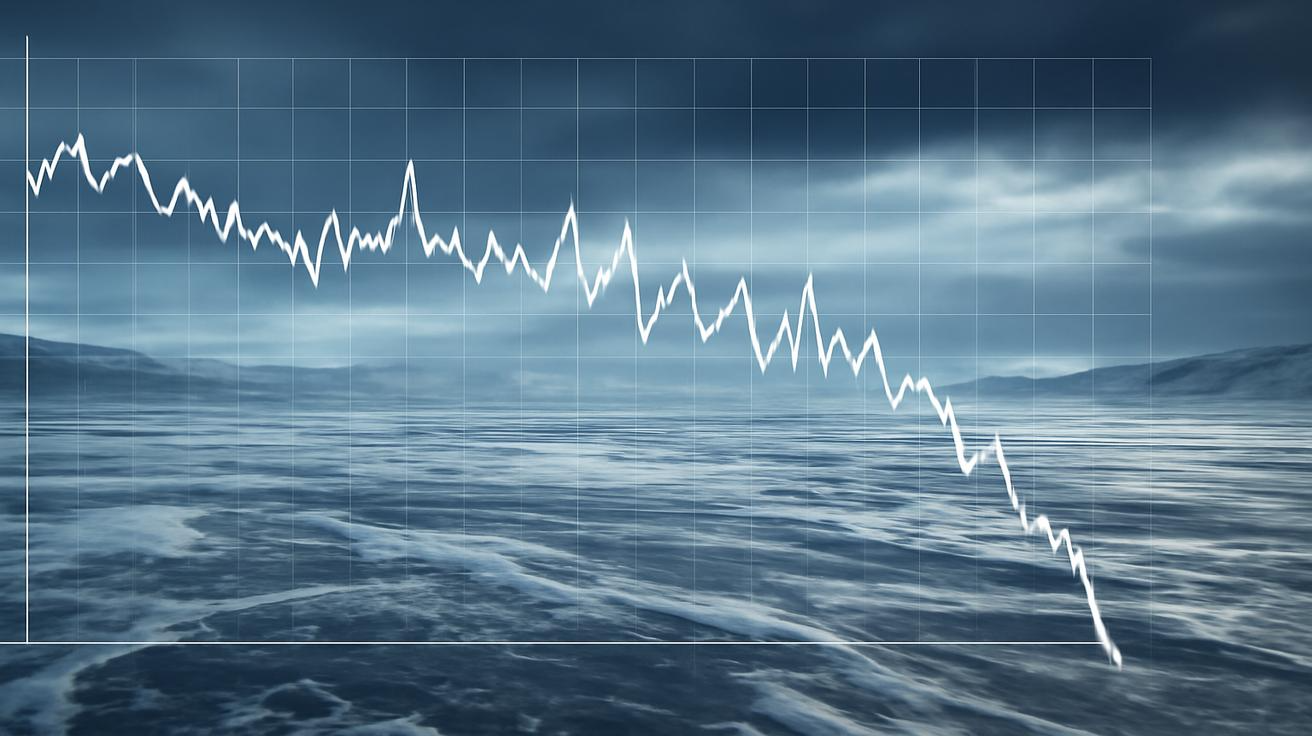
A powerful disturbance forming high above the Arctic is raising alarms among meteorologists, with early indicators suggesting one of the most unusual polar vortex events seen in decades. While the phenomenon itself occurs miles above Earth in the stratosphere, its consequences can ripple all the way down to everyday life—bringing sudden cold waves, snowstorms, and prolonged winter conditions.
The current atmospheric signals show the polar vortex weakening and becoming unstable. If the pattern continues to evolve as forecast models suggest, February could see widespread cold outbreaks across parts of North America, Europe, and Asia. For communities accustomed to milder winters, the shift could be dramatic.
What Is Happening to the Polar Vortex?

The polar vortex is essentially a vast ring of powerful winds circling the Arctic high in the atmosphere. In a typical winter, it acts like a barrier, keeping the coldest air trapped near the North Pole.
When that system becomes unstable, the circulation can weaken or split apart. This allows pockets of frigid Arctic air to spill southward into mid-latitude regions, sometimes triggering extended cold spells.
Meteorologists believe this is exactly what may be developing now. Temperatures in the Arctic stratosphere have risen sharply—an event known as sudden stratospheric warming—which can disrupt the vortex’s normal circulation.
Why Scientists Are Paying Close Attention

Sudden stratospheric warming events are rare but powerful. When they occur, they can shift weather patterns for weeks.
The current atmospheric data suggests a disturbance strong enough to potentially reshape the jet stream. Instead of flowing smoothly around the globe, the jet stream can bend dramatically, allowing cold Arctic air masses to push farther south than usual.
Weather centers analyzing multiple forecast models are seeing a consistent signal: the polar vortex may weaken significantly during February. While it’s too early to pinpoint specific regions, the overall pattern could favor colder conditions across several mid-latitude areas.
Historical Polar Vortex Disruptions

Below is a look at several major polar vortex disturbances and their impacts:
| Year | Major Polar Vortex Event | Notable Surface Impacts |
|---|---|---|
| 1985 | Strong mid-winter weakening | Severe cold across the U.S. and Europe |
| 2009 | Sudden stratospheric warming | Prolonged cold and heavy snowfall in Europe and Asia |
| 2014 | Vortex displacement | Arctic air surge across North America |
| 2018 | Late-winter disruption | “Beast from the East” cold wave in Europe |
| This Year | Developing disruption | Potential widespread cold outbreaks |
Events like these demonstrate how changes far above Earth can dramatically influence surface weather.
What It Could Mean for Everyday Life
If the disruption continues to strengthen, the impacts could extend beyond simple temperature drops.
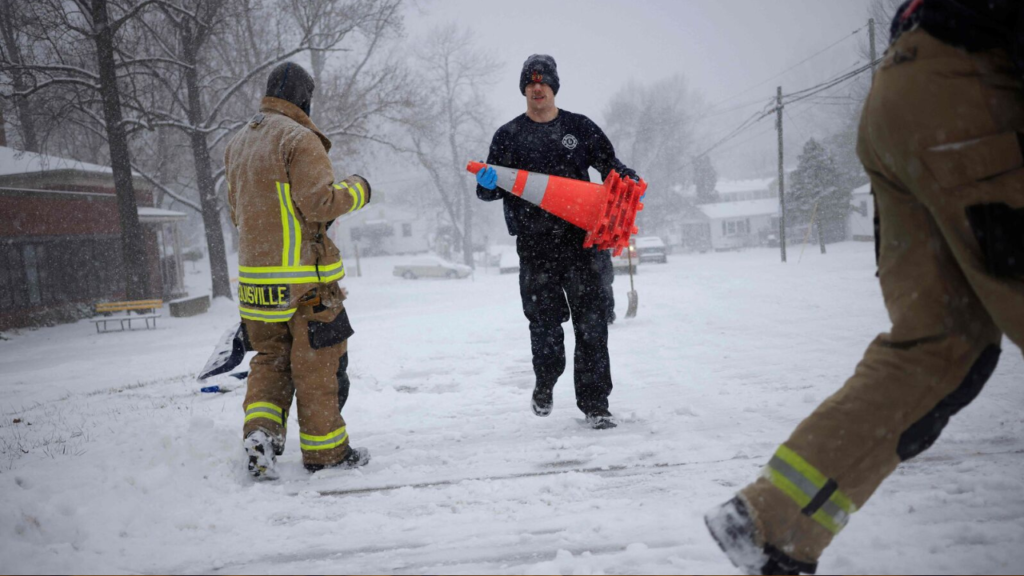
Cold outbreaks can strain energy grids as heating demand rises. Transportation networks often face disruptions from snow and ice, while agriculture can also be affected if extended freezes reach sensitive crops or livestock areas.
Urban regions may see icy roads and slower supply chains, while rural communities could face challenges related to infrastructure and transportation.
For many households, preparation becomes important when prolonged cold is possible—checking heating systems, protecting pipes, and ensuring vehicles are ready for winter conditions.
The Climate Question
Interestingly, polar vortex disruptions are occurring in a world that is overall warming.
Scientists continue studying how Arctic warming may influence the behavior of the polar vortex. Some research suggests that changing sea-ice patterns and temperature contrasts could make the vortex more vulnerable to disturbances.
However, the relationship is complex and still under investigation. What is clear is that extreme winter events can still occur even as global temperatures rise.
Why This Event Matters
Polar vortex disruptions are not new, but the signals emerging this winter are drawing unusual attention from atmospheric researchers. Indicators suggest the system may weaken more dramatically than in many recent winters.
That doesn’t guarantee severe cold everywhere. Weather outcomes depend on how the jet stream ultimately responds and where displaced Arctic air travels.
Still, scientists agree that the developing pattern is worth watching closely. If the vortex continues to destabilize, February could bring one of the most notable late-winter cold setups in years.
For forecasters and communities alike, the coming weeks may reveal just how powerful this atmospheric shift becomes.
  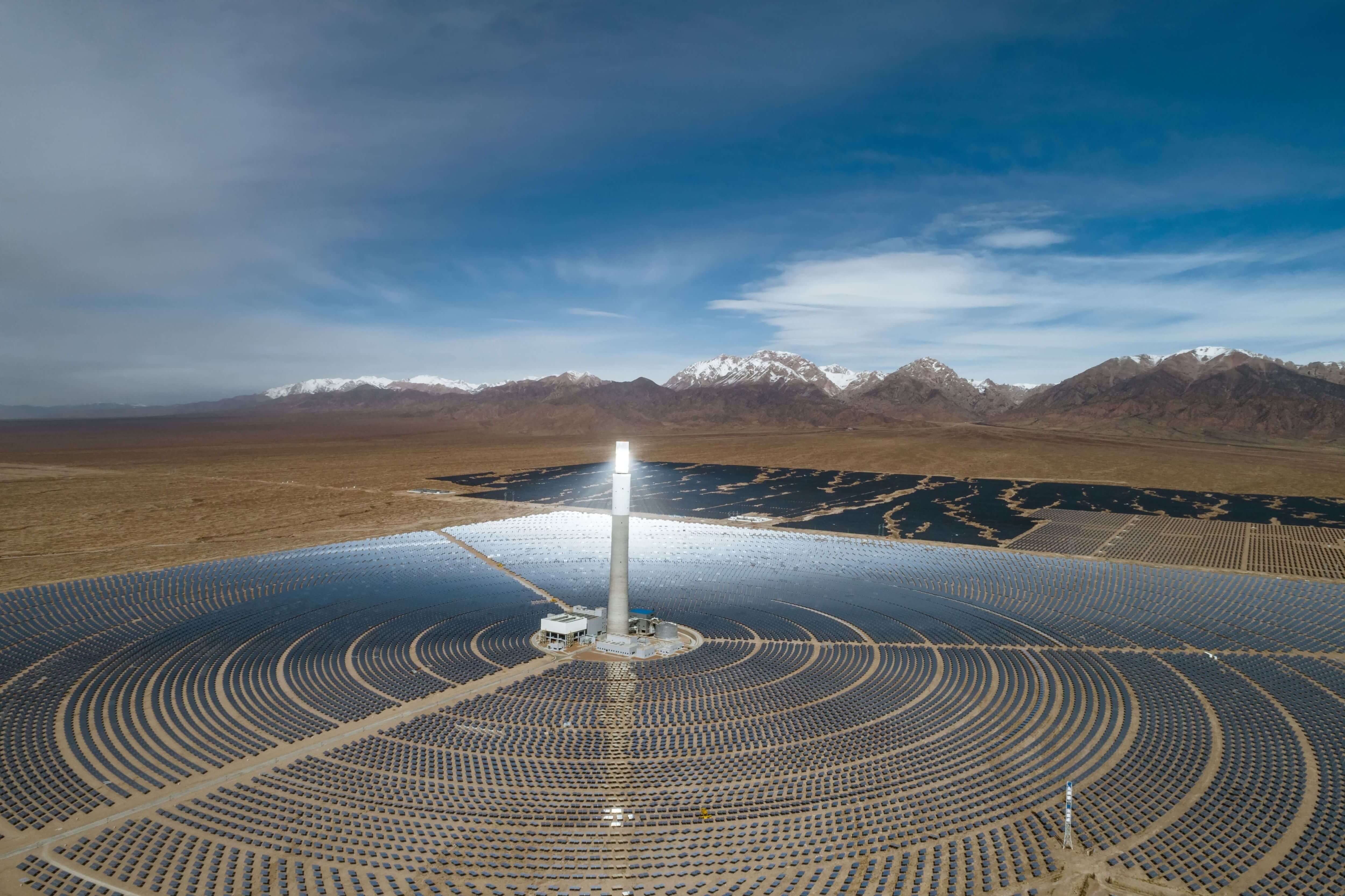 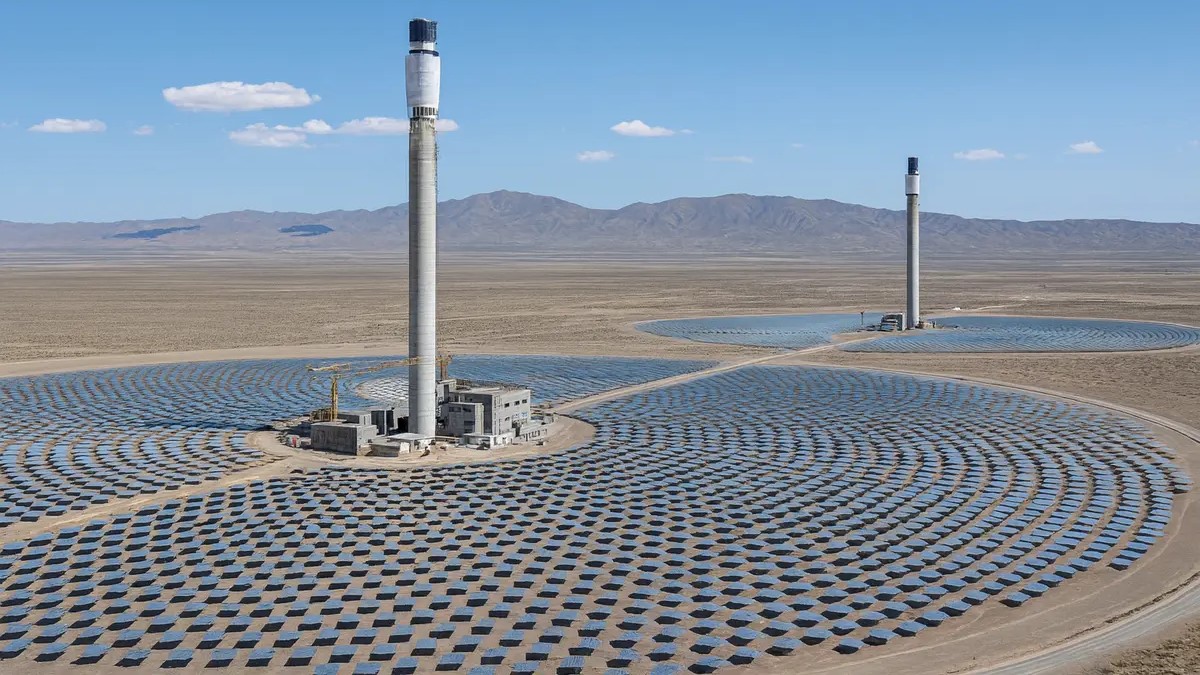 ## Scientists Are Building an “Artificial Sun” in the Desert — And It Could Change How Cities Get Power In a remote desert landscape, something extraordinary is taking shape. Thousands of mirrors stretch across the sand, reflecting sunlight toward a central tower that glows brighter than anything else in sight. Nearby, inside steel chambers and advanced laboratories, scientists are attempting something even more ambitious: recreating the energy process that powers the stars. Researchers and engineers have begun calling the project an **“artificial sun.”** The goal is simple but revolutionary — generate enormous amounts of clean electricity using the same fusion process that fuels the real sun. If successful, this technology could provide nearly unlimited energy for cities while dramatically reducing carbon emissions. ## What Is an Artificial Sun? The term “artificial sun” refers to **nuclear fusion reactors**, experimental machines designed to replicate the reaction happening inside stars. ### How fusion works In the core of the sun, hydrogen atoms collide under extreme heat and pressure. They fuse together to form helium, releasing massive amounts of energy. Scientists are trying to recreate that reaction on Earth. To do this, they: * Heat hydrogen fuel into plasma hotter than the sun’s core * Use powerful magnetic fields to hold the plasma in place * Trigger atomic fusion that releases energy If the process becomes stable and efficient, fusion could provide **clean, abundant electricity with minimal environmental impact.** ## Why the Desert Is the Perfect Location Fusion facilities and large solar energy complexes require huge amounts of space and sunlight. That’s why many experimental projects are being built in desert regions. ### Advantages of desert locations * Up to **300 sunny days per year** * Large open land areas for solar mirror fields * Low population density * Stable ground for heavy infrastructure The desert environment also allows researchers to combine fusion research with **concentrated solar power systems**, creating hybrid energy plants. ## The Role of Giant Mirror Fields One of the most striking features of the facility is the field of heliostats — massive mirrors that follow the sun across the sky. Each mirror reflects sunlight toward a central tower where heat is collected and stored. ### What heliostats do * Concentrate sunlight into extremely high temperatures * Produce steam that spins turbines * Store thermal energy in molten salt tanks * Generate electricity even after sunset This solar system provides immediate renewable power while supporting the experimental fusion infrastructure nearby. ## How the Artificial Sun Could Power Cities The long-term goal is to create power plants that operate around the clock without fossil fuels. Fusion could provide stable electricity regardless of weather conditions, solving one of the biggest challenges facing renewable energy today. ### Potential energy output Component | Purpose | Estimated Impact Solar mirror tower | Daytime renewable electricity | Up to 150,000 homes Fusion test reactors | Experimental constant power | ~50,000 homes in early phases Thermal storage tanks | Nighttime electricity supply | 4–6 hours grid backup Battery systems | Stabilize the grid | Instant response to demand spikes Although these numbers are still projections, the concept shows how multiple technologies could work together to power entire urban areas. ## Why Fusion Energy Is So Important Global electricity demand continues to grow as more systems move toward electrification — from vehicles to heating systems and data centers. Fusion energy offers several advantages compared with traditional power sources. ### Key benefits of fusion power * No greenhouse gas emissions during operation * Fuel derived from hydrogen, one of the most abundant elements * Minimal long-term radioactive waste * No risk of runaway chain reactions Because of these factors, fusion is often described as the **“holy grail of clean energy.”** ## The Biggest Challenges Scientists Still Face Despite decades of research, fusion remains one of the most difficult engineering challenges in modern science. Creating plasma hotter than the sun and controlling it inside a reactor requires incredibly precise technology. ### Major hurdles * Maintaining stable plasma for long periods * Designing materials that survive extreme heat * Scaling experimental reactors into commercial power plants * Reducing costs so electricity becomes affordable Scientists have made major breakthroughs recently, including successful experiments that produced **net energy gain for brief moments**. However, reliable commercial fusion power is still under development. ## Key Takeaways * Scientists are building experimental fusion reactors known as **artificial suns**. * These projects aim to generate massive amounts of clean electricity. * Desert locations provide ideal conditions for solar and fusion infrastructure. * Fusion could eventually deliver constant, low-carbon energy for cities worldwide. While the technology is still evolving, progress is accelerating as governments and private companies invest billions into fusion research. ## Frequently Asked Questions ### What is an artificial sun in energy research? An artificial sun is a nuclear fusion reactor designed to replicate the energy process that powers stars. ### Is fusion energy safer than nuclear power? Fusion generally produces less radioactive waste and cannot trigger runaway chain reactions like traditional nuclear fission plants. ### When will fusion power become widely available? Many experts expect early commercial fusion plants to appear between the **2030s and 2040s**, though timelines remain uncertain. ### Why are fusion experiments built in deserts? Deserts provide strong sunlight, large open land areas, and stable environments for building large energy facilities. ### Could fusion completely replace fossil fuels? Fusion could become a major clean energy source, but it will likely work alongside solar, wind, and other renewable technologies. ## Conclusion For decades, the idea of building a miniature star on Earth sounded like science fiction. Today, that vision is slowly becoming reality in remote deserts where scientists are testing the limits of physics and engineering. The artificial sun projects rising from the sand represent more than an experiment. They represent a new possibility for how humanity powers its future. If fusion energy succeeds, the lights in cities around the world may one day be powered by the same process that makes the stars shine.](https://ozpuff.com.au/wp-content/uploads/2026/03/Scientists-Are-Building-an-Artificial-Sun-in-the-Desert-—-And-It-Could-Change-How-Cities-Get-Power-1024x576.png)