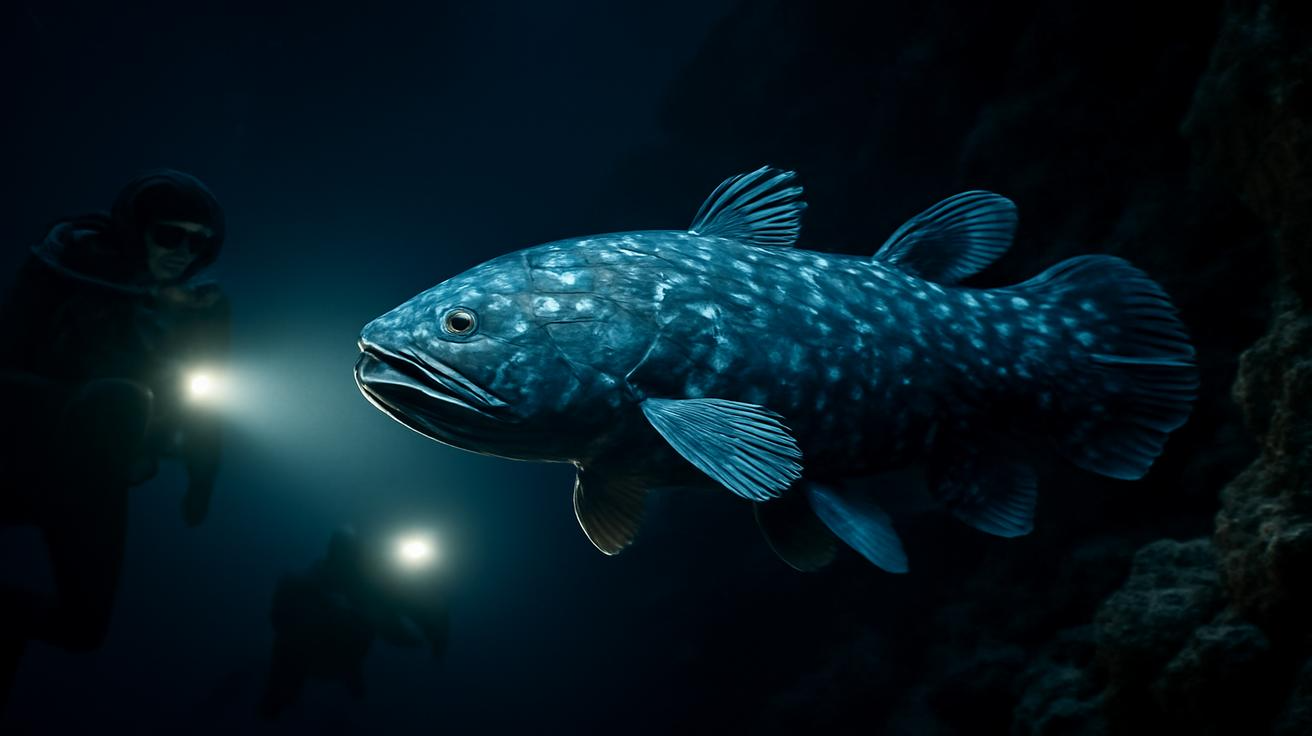
A deep technical dive off the coast of Indonesia has produced something marine scientists rarely see: clear, close-range footage of one of the ocean’s most mysterious creatures. French divers exploring a steep reef wall captured remarkable images of a coelacanth—an ancient fish species once believed to have vanished millions of years ago.
The discovery is drawing attention from marine biologists worldwide because high-quality footage of the Indonesian coelacanth in its natural habitat remains extremely rare. Encounters typically occur far below standard diving limits, making every documented sighting valuable for science.

For researchers studying the evolution of life in Earth’s oceans, the images offer an unusually detailed glimpse of an animal that has survived since long before dinosaurs disappeared.
A Fish From Deep Time
Coelacanths belong to one of the oldest known groups of vertebrates. Fossils show that their ancestors swam in ancient seas more than 360 million years ago. For decades, scientists believed the entire lineage had gone extinct until a living specimen was discovered in 1938 off the coast of South Africa.
Today, two known species exist: the African coelacanth and the Indonesian coelacanth. The recent dive documented the Indonesian species, rarely photographed in the wild.

What makes the fish extraordinary is its anatomy. Unlike most fish, its fins are thick and limb-like, moving in a coordinated pattern that resembles the motion of walking. Scientists believe similar fin structures in ancient species may have eventually evolved into the limbs of early land animals.
A Unique Movement Style
Divers observing the fish reported slow, deliberate movement along the rock face. Instead of quick bursts of speed, the coelacanth glides with controlled fin rotations, conserving energy in the deep ocean environment.
Large reflective eyes help it navigate dim waters where sunlight barely penetrates. The fish typically remains near caves and overhangs, drifting in and out of shadow while maintaining a calm, almost hovering posture.
Why Indonesian Waters Are Important

The Indonesian coelacanth was only formally recognized in the late 1990s after fishermen near North Sulawesi occasionally caught unusual deep-water fish in their nets.
Genetic studies confirmed these fish represented a separate species from the African population. That discovery changed how scientists view coelacanth distribution, suggesting that isolated populations may exist in different parts of the Indian and Pacific Oceans.
Despite this breakthrough, sightings remain extremely rare because the fish prefers deep underwater slopes and caves well beyond the range of typical recreational diving.
African vs Indonesian Coelacanth
| Feature | African Coelacanth | Indonesian Coelacanth |
|---|---|---|
| Scientific Name | Latimeria chalumnae | Latimeria menadoensis |
| Main Region | Western Indian Ocean | Northern Indonesia |
| Typical Color | Deep blue with white spots | Brownish to bluish-gray |
| Known Depth Range | ~100–300 meters | ~80–200 meters |
| First Confirmed Discovery | 1938 | Late 1990s |
| Conservation Status | Critically Endangered (regional) | Vulnerable / data limited |
Diving at the Limits of Exploration
The divers who captured the footage were operating at depths of around 60 meters, which already requires specialized technical diving equipment and carefully planned decompression stops.
Beyond these depths, nitrogen exposure, oxygen toxicity, and extended ascent times significantly increase the risk. Technical divers must carry multiple gas mixtures and backup systems to safely explore such environments.
Encounters with rare deep-sea animals like the coelacanth often occur during these carefully controlled expeditions.
Valuable Data for Scientists
Clear images provide more than visual proof. Researchers can analyze the fish’s posture, fin movement, and habitat choice to better understand its behavior.
This information helps identify important deep-water environments that may need stronger conservation protections. Coelacanth populations remain vulnerable to accidental capture in deep fishing nets and changes in marine ecosystems.
Why This Discovery Matters
The new footage reinforces how little humanity still knows about life in the deep ocean. Even species that have existed for hundreds of millions of years can remain largely hidden from view.
For marine researchers, every confirmed sighting contributes to a clearer understanding of how these ancient animals survive today. For the wider public, it is a reminder that the oceans still hold remarkable living connections to Earth’s distant past.
The coelacanth’s survival across geological eras is extraordinary. Capturing it alive, calm in its natural environment, offers a rare glimpse of evolutionary history continuing to swim quietly beneath the waves.

  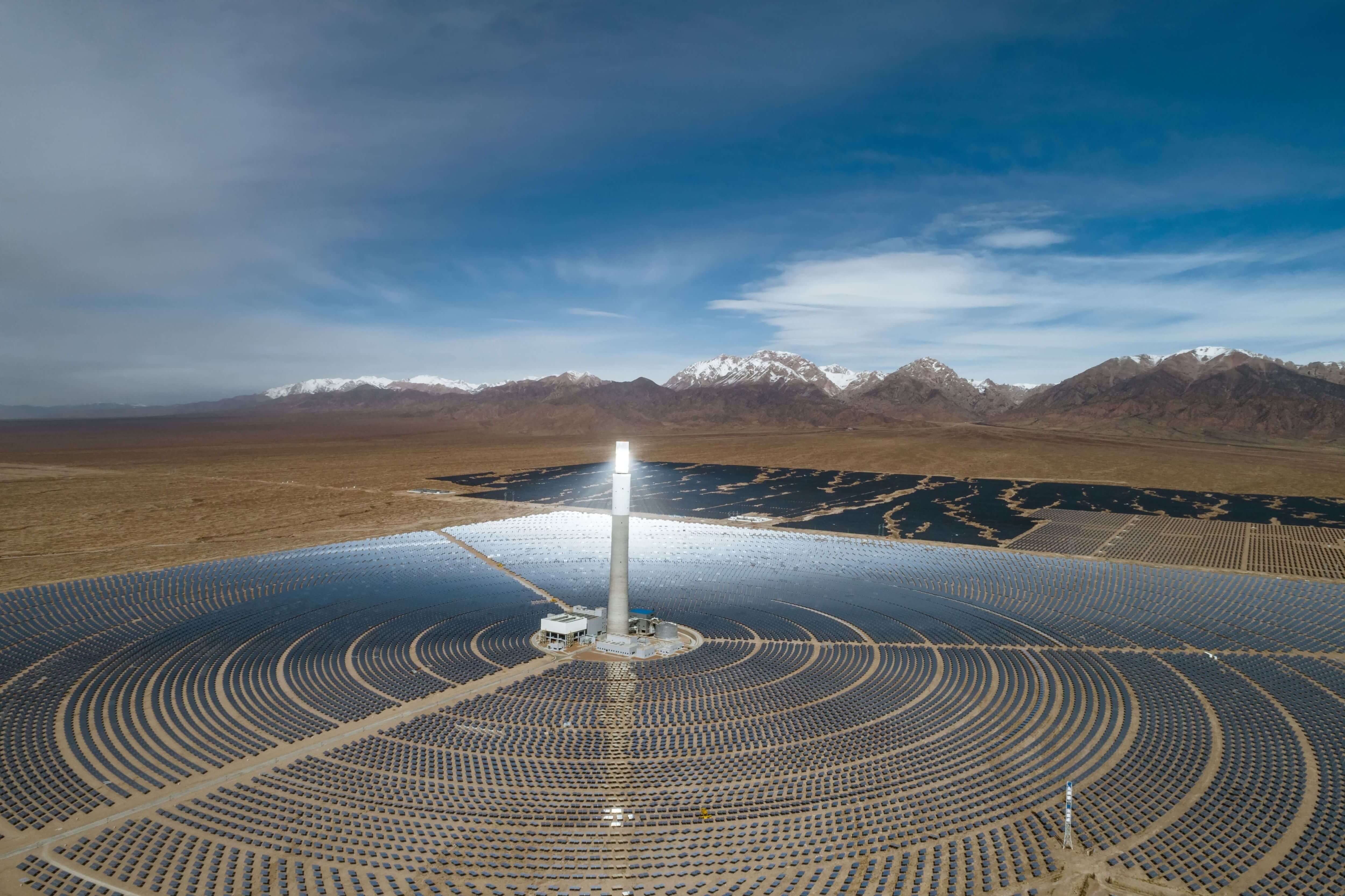 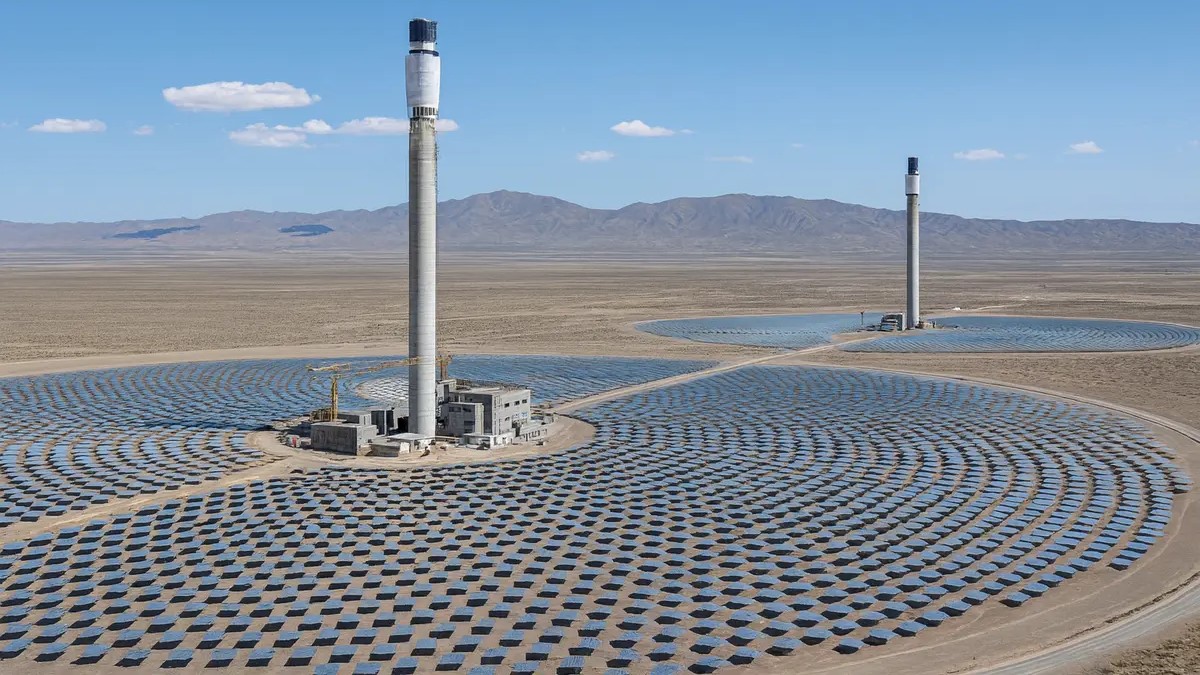 ## Scientists Are Building an “Artificial Sun” in the Desert — And It Could Change How Cities Get Power In a remote desert landscape, something extraordinary is taking shape. Thousands of mirrors stretch across the sand, reflecting sunlight toward a central tower that glows brighter than anything else in sight. Nearby, inside steel chambers and advanced laboratories, scientists are attempting something even more ambitious: recreating the energy process that powers the stars. Researchers and engineers have begun calling the project an **“artificial sun.”** The goal is simple but revolutionary — generate enormous amounts of clean electricity using the same fusion process that fuels the real sun. If successful, this technology could provide nearly unlimited energy for cities while dramatically reducing carbon emissions. ## What Is an Artificial Sun? The term “artificial sun” refers to **nuclear fusion reactors**, experimental machines designed to replicate the reaction happening inside stars. ### How fusion works In the core of the sun, hydrogen atoms collide under extreme heat and pressure. They fuse together to form helium, releasing massive amounts of energy. Scientists are trying to recreate that reaction on Earth. To do this, they: * Heat hydrogen fuel into plasma hotter than the sun’s core * Use powerful magnetic fields to hold the plasma in place * Trigger atomic fusion that releases energy If the process becomes stable and efficient, fusion could provide **clean, abundant electricity with minimal environmental impact.** ## Why the Desert Is the Perfect Location Fusion facilities and large solar energy complexes require huge amounts of space and sunlight. That’s why many experimental projects are being built in desert regions. ### Advantages of desert locations * Up to **300 sunny days per year** * Large open land areas for solar mirror fields * Low population density * Stable ground for heavy infrastructure The desert environment also allows researchers to combine fusion research with **concentrated solar power systems**, creating hybrid energy plants. ## The Role of Giant Mirror Fields One of the most striking features of the facility is the field of heliostats — massive mirrors that follow the sun across the sky. Each mirror reflects sunlight toward a central tower where heat is collected and stored. ### What heliostats do * Concentrate sunlight into extremely high temperatures * Produce steam that spins turbines * Store thermal energy in molten salt tanks * Generate electricity even after sunset This solar system provides immediate renewable power while supporting the experimental fusion infrastructure nearby. ## How the Artificial Sun Could Power Cities The long-term goal is to create power plants that operate around the clock without fossil fuels. Fusion could provide stable electricity regardless of weather conditions, solving one of the biggest challenges facing renewable energy today. ### Potential energy output Component | Purpose | Estimated Impact Solar mirror tower | Daytime renewable electricity | Up to 150,000 homes Fusion test reactors | Experimental constant power | ~50,000 homes in early phases Thermal storage tanks | Nighttime electricity supply | 4–6 hours grid backup Battery systems | Stabilize the grid | Instant response to demand spikes Although these numbers are still projections, the concept shows how multiple technologies could work together to power entire urban areas. ## Why Fusion Energy Is So Important Global electricity demand continues to grow as more systems move toward electrification — from vehicles to heating systems and data centers. Fusion energy offers several advantages compared with traditional power sources. ### Key benefits of fusion power * No greenhouse gas emissions during operation * Fuel derived from hydrogen, one of the most abundant elements * Minimal long-term radioactive waste * No risk of runaway chain reactions Because of these factors, fusion is often described as the **“holy grail of clean energy.”** ## The Biggest Challenges Scientists Still Face Despite decades of research, fusion remains one of the most difficult engineering challenges in modern science. Creating plasma hotter than the sun and controlling it inside a reactor requires incredibly precise technology. ### Major hurdles * Maintaining stable plasma for long periods * Designing materials that survive extreme heat * Scaling experimental reactors into commercial power plants * Reducing costs so electricity becomes affordable Scientists have made major breakthroughs recently, including successful experiments that produced **net energy gain for brief moments**. However, reliable commercial fusion power is still under development. ## Key Takeaways * Scientists are building experimental fusion reactors known as **artificial suns**. * These projects aim to generate massive amounts of clean electricity. * Desert locations provide ideal conditions for solar and fusion infrastructure. * Fusion could eventually deliver constant, low-carbon energy for cities worldwide. While the technology is still evolving, progress is accelerating as governments and private companies invest billions into fusion research. ## Frequently Asked Questions ### What is an artificial sun in energy research? An artificial sun is a nuclear fusion reactor designed to replicate the energy process that powers stars. ### Is fusion energy safer than nuclear power? Fusion generally produces less radioactive waste and cannot trigger runaway chain reactions like traditional nuclear fission plants. ### When will fusion power become widely available? Many experts expect early commercial fusion plants to appear between the **2030s and 2040s**, though timelines remain uncertain. ### Why are fusion experiments built in deserts? Deserts provide strong sunlight, large open land areas, and stable environments for building large energy facilities. ### Could fusion completely replace fossil fuels? Fusion could become a major clean energy source, but it will likely work alongside solar, wind, and other renewable technologies. ## Conclusion For decades, the idea of building a miniature star on Earth sounded like science fiction. Today, that vision is slowly becoming reality in remote deserts where scientists are testing the limits of physics and engineering. The artificial sun projects rising from the sand represent more than an experiment. They represent a new possibility for how humanity powers its future. If fusion energy succeeds, the lights in cities around the world may one day be powered by the same process that makes the stars shine.](https://ozpuff.com.au/wp-content/uploads/2026/03/Scientists-Are-Building-an-Artificial-Sun-in-the-Desert-—-And-It-Could-Change-How-Cities-Get-Power-1024x576.png)