
A critical ocean current that quietly regulates much of Earth’s climate may be weakening faster than scientists expected. New observations from long-running monitoring systems in the Atlantic suggest that the massive circulation pattern known as the Atlantic Meridional Overturning Circulation (AMOC) has been losing strength over recent decades.
For most people, this current is invisible. Yet it plays a powerful role in controlling weather patterns, sea levels, and rainfall across several continents. As new data emerges from ocean sensors, satellites, and research expeditions, scientists are increasingly concerned about what a long-term slowdown could mean for the global climate system.
The Ocean’s Hidden Climate Engine

Deep beneath the Atlantic’s surface flows one of the planet’s most important climate regulators. The AMOC works like a gigantic conveyor belt that redistributes heat around the world.
Warm, salty water travels north from the tropics toward Europe and the Arctic. When it cools in colder northern regions, the water becomes denser and sinks into the deep ocean. From there, it flows south again, completing a slow but powerful cycle.
This circulation helps explain why Western Europe experiences relatively mild winters despite its high latitude. It also influences tropical rainfall patterns, storm formation, and ocean temperatures across the Atlantic basin.

Scientists estimate the system moves more water than all of Earth’s rivers combined.
New Measurements Raise Concerns
Tracking a current that spans thousands of kilometers requires a global network of instruments. Researchers rely on anchored sensor arrays, floating probes, satellites, and climate models to measure its behavior.
Over the past two decades, several indicators have pointed in the same direction: the current appears to be slowing.

Evidence suggests the AMOC may already be 10–20 percent weaker than it was in the mid-20th century. While the system naturally fluctuates over time, the persistence of this downward trend has drawn increasing attention from climate researchers.
Key Indicators Scientists Monitor
| Aspect | What It Measures | Why It Matters |
|---|---|---|
| Current Strength | Speed and volume of water transport | Shows how much heat is being moved across the Atlantic |
| Temperature Profiles | Water temperatures at different depths | Reveals stored ocean heat affecting storms and climate |
| Salinity Levels | Salt concentration in surface and deep waters | Determines water density, which drives sinking currents |
| Sea Surface Height | Subtle differences in ocean surface elevation | Signals shifts in currents and regional sea levels |
| Ice Melt Rates | Freshwater input from Greenland and Arctic ice | Excess freshwater can weaken circulation patterns |
Together, these measurements provide the clearest picture yet of how the current is evolving.
Why Freshwater Is Disrupting the System
The AMOC relies on a delicate balance between temperature and salinity. Cold, salty water in the North Atlantic sinks and pulls warm surface water northward, maintaining the circulation.
However, rising global temperatures are accelerating the melting of Greenland’s ice sheet and Arctic sea ice. This process releases large amounts of freshwater into the North Atlantic.
Freshwater is lighter than salty water. When too much accumulates at the surface, it reduces the density difference needed for water to sink — effectively slowing the engine that powers the circulation.
Climate scientists increasingly believe this freshwater influx is a key factor behind the observed weakening.
Potential Impacts on Weather and Sea Levels
A weaker AMOC doesn’t mean an immediate climate disaster, but it can influence weather patterns in several ways.
In Europe, the current’s slowdown could reduce the flow of warm water northward, potentially leading to more variable winter weather despite overall global warming.
In tropical regions, shifts in ocean heat distribution may influence rainfall patterns and monsoon systems. Warmer waters in certain parts of the Atlantic could also affect hurricane development.
Another consequence is regional sea-level rise. Changes in ocean circulation can alter how water piles up along coastlines. Parts of the eastern United States, for example, could experience faster sea-level increases if the current continues to weaken.
What Scientists Are Watching Next
Researchers emphasize that the AMOC is not collapsing today, but its gradual slowdown is now measurable rather than theoretical.
Future research will focus on tracking Greenland ice melt, monitoring ocean salinity in the North Atlantic, and improving climate models that simulate how the circulation might respond to continued warming.
Understanding these trends is essential because the AMOC has shaped global climate stability for thousands of years. Even moderate changes in such a massive system could have far-reaching consequences.
A Quiet Change with Global Implications
Unlike storms or heatwaves, shifts in ocean circulation unfold slowly and out of sight. Yet their influence can ripple through weather systems, sea levels, and ecosystems worldwide.
The emerging evidence suggests that one of Earth’s most important climate regulators is already changing. As scientists continue to monitor the Atlantic’s deep currents, the data will play a crucial role in predicting how the planet’s weather patterns evolve in the decades ahead.

  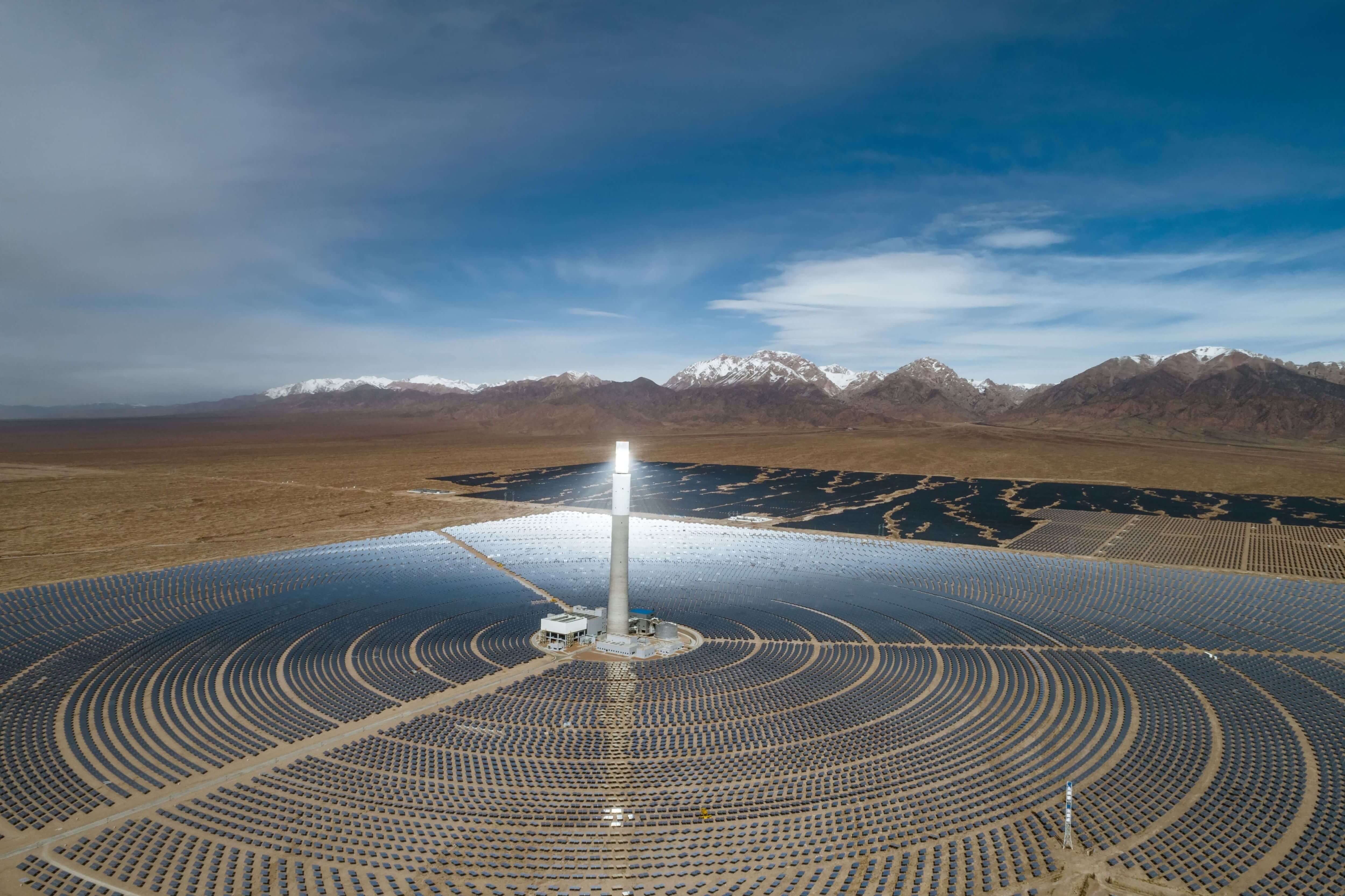 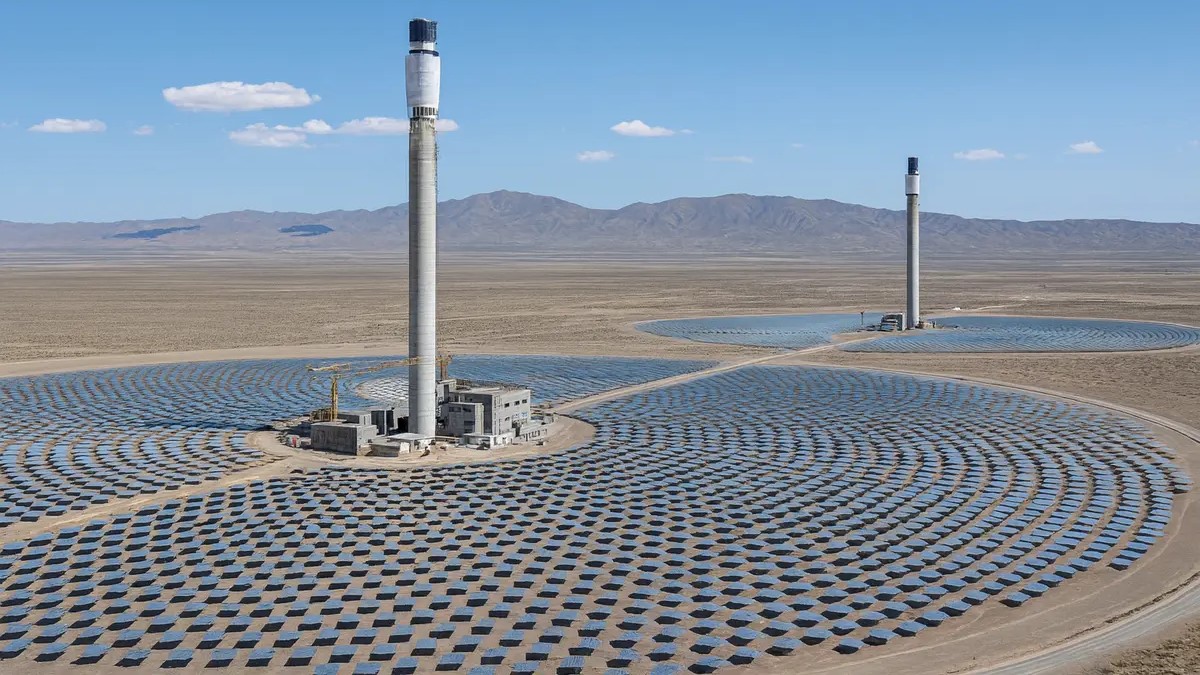 ## Scientists Are Building an “Artificial Sun” in the Desert — And It Could Change How Cities Get Power In a remote desert landscape, something extraordinary is taking shape. Thousands of mirrors stretch across the sand, reflecting sunlight toward a central tower that glows brighter than anything else in sight. Nearby, inside steel chambers and advanced laboratories, scientists are attempting something even more ambitious: recreating the energy process that powers the stars. Researchers and engineers have begun calling the project an **“artificial sun.”** The goal is simple but revolutionary — generate enormous amounts of clean electricity using the same fusion process that fuels the real sun. If successful, this technology could provide nearly unlimited energy for cities while dramatically reducing carbon emissions. ## What Is an Artificial Sun? The term “artificial sun” refers to **nuclear fusion reactors**, experimental machines designed to replicate the reaction happening inside stars. ### How fusion works In the core of the sun, hydrogen atoms collide under extreme heat and pressure. They fuse together to form helium, releasing massive amounts of energy. Scientists are trying to recreate that reaction on Earth. To do this, they: * Heat hydrogen fuel into plasma hotter than the sun’s core * Use powerful magnetic fields to hold the plasma in place * Trigger atomic fusion that releases energy If the process becomes stable and efficient, fusion could provide **clean, abundant electricity with minimal environmental impact.** ## Why the Desert Is the Perfect Location Fusion facilities and large solar energy complexes require huge amounts of space and sunlight. That’s why many experimental projects are being built in desert regions. ### Advantages of desert locations * Up to **300 sunny days per year** * Large open land areas for solar mirror fields * Low population density * Stable ground for heavy infrastructure The desert environment also allows researchers to combine fusion research with **concentrated solar power systems**, creating hybrid energy plants. ## The Role of Giant Mirror Fields One of the most striking features of the facility is the field of heliostats — massive mirrors that follow the sun across the sky. Each mirror reflects sunlight toward a central tower where heat is collected and stored. ### What heliostats do * Concentrate sunlight into extremely high temperatures * Produce steam that spins turbines * Store thermal energy in molten salt tanks * Generate electricity even after sunset This solar system provides immediate renewable power while supporting the experimental fusion infrastructure nearby. ## How the Artificial Sun Could Power Cities The long-term goal is to create power plants that operate around the clock without fossil fuels. Fusion could provide stable electricity regardless of weather conditions, solving one of the biggest challenges facing renewable energy today. ### Potential energy output Component | Purpose | Estimated Impact Solar mirror tower | Daytime renewable electricity | Up to 150,000 homes Fusion test reactors | Experimental constant power | ~50,000 homes in early phases Thermal storage tanks | Nighttime electricity supply | 4–6 hours grid backup Battery systems | Stabilize the grid | Instant response to demand spikes Although these numbers are still projections, the concept shows how multiple technologies could work together to power entire urban areas. ## Why Fusion Energy Is So Important Global electricity demand continues to grow as more systems move toward electrification — from vehicles to heating systems and data centers. Fusion energy offers several advantages compared with traditional power sources. ### Key benefits of fusion power * No greenhouse gas emissions during operation * Fuel derived from hydrogen, one of the most abundant elements * Minimal long-term radioactive waste * No risk of runaway chain reactions Because of these factors, fusion is often described as the **“holy grail of clean energy.”** ## The Biggest Challenges Scientists Still Face Despite decades of research, fusion remains one of the most difficult engineering challenges in modern science. Creating plasma hotter than the sun and controlling it inside a reactor requires incredibly precise technology. ### Major hurdles * Maintaining stable plasma for long periods * Designing materials that survive extreme heat * Scaling experimental reactors into commercial power plants * Reducing costs so electricity becomes affordable Scientists have made major breakthroughs recently, including successful experiments that produced **net energy gain for brief moments**. However, reliable commercial fusion power is still under development. ## Key Takeaways * Scientists are building experimental fusion reactors known as **artificial suns**. * These projects aim to generate massive amounts of clean electricity. * Desert locations provide ideal conditions for solar and fusion infrastructure. * Fusion could eventually deliver constant, low-carbon energy for cities worldwide. While the technology is still evolving, progress is accelerating as governments and private companies invest billions into fusion research. ## Frequently Asked Questions ### What is an artificial sun in energy research? An artificial sun is a nuclear fusion reactor designed to replicate the energy process that powers stars. ### Is fusion energy safer than nuclear power? Fusion generally produces less radioactive waste and cannot trigger runaway chain reactions like traditional nuclear fission plants. ### When will fusion power become widely available? Many experts expect early commercial fusion plants to appear between the **2030s and 2040s**, though timelines remain uncertain. ### Why are fusion experiments built in deserts? Deserts provide strong sunlight, large open land areas, and stable environments for building large energy facilities. ### Could fusion completely replace fossil fuels? Fusion could become a major clean energy source, but it will likely work alongside solar, wind, and other renewable technologies. ## Conclusion For decades, the idea of building a miniature star on Earth sounded like science fiction. Today, that vision is slowly becoming reality in remote deserts where scientists are testing the limits of physics and engineering. The artificial sun projects rising from the sand represent more than an experiment. They represent a new possibility for how humanity powers its future. If fusion energy succeeds, the lights in cities around the world may one day be powered by the same process that makes the stars shine.](https://ozpuff.com.au/wp-content/uploads/2026/03/Scientists-Are-Building-an-Artificial-Sun-in-the-Desert-—-And-It-Could-Change-How-Cities-Get-Power-1024x576.png)