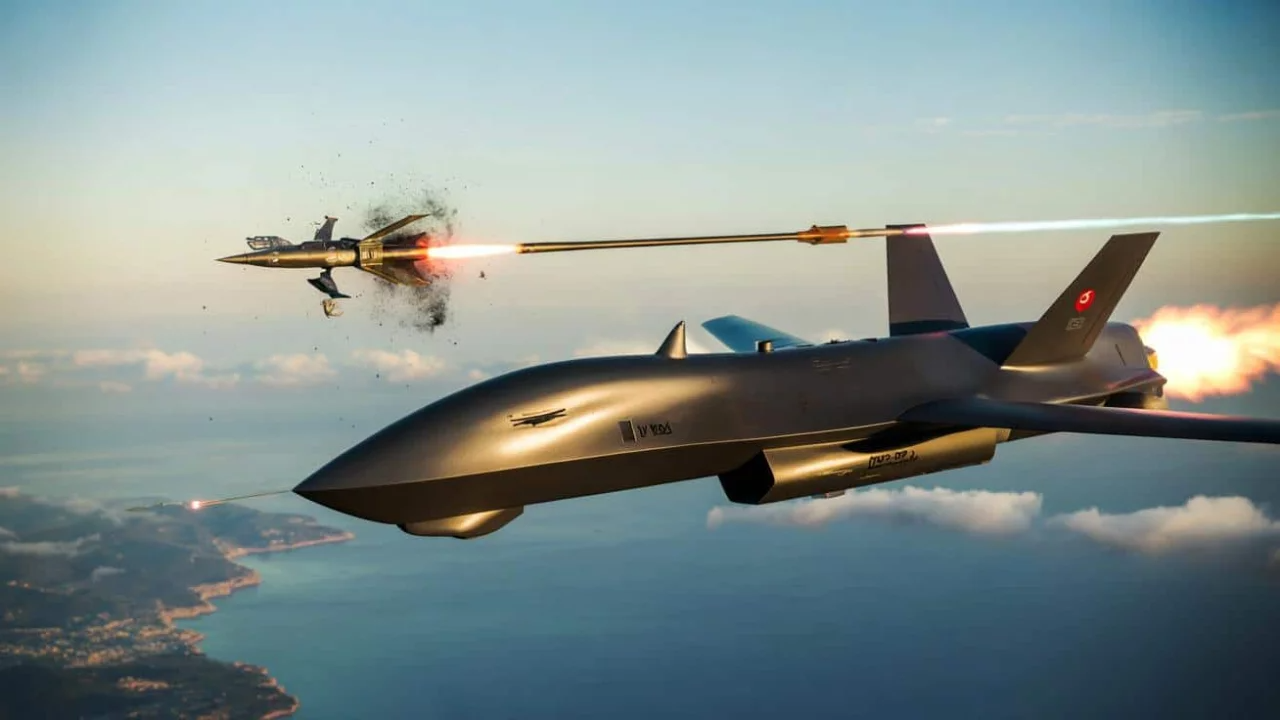
Turkey has achieved a milestone that could redefine air defense worldwide. For the first time, a Turkish drone successfully intercepted and destroyed a moving supersonic target—a feat long considered one of the most challenging tests in aerial warfare. This breakthrough demonstrates the rapid evolution of unmanned systems and signals a shift in global military dynamics.
The test, conducted on a highly controlled range, involved a target traveling faster than Mach 1 through complex airspace. Unlike stationary or slow-moving targets used in conventional drills, this supersonic target demanded split-second decision-making and pinpoint precision, showcasing Turkey’s growing capabilities in autonomous aerial technology.
A Historic Leap in Drone Technology
Turkey’s defense sector has invested heavily in artificial intelligence and autonomous systems over the past decade. The latest achievement reflects years of coordinated research between state-funded centers, universities, and private contractors like Turkish Aerospace Industries and Baykar Makina. Unlike previous programs in other countries, this success was entirely homegrown—Turkey did not rely on foreign licensing or partnerships.
“This development represents a fundamental shift in air defense,” said Dr. Mehmet Arlı of Istanbul’s Defense Technology Institute. “Nations without advanced counter-drone capabilities face new vulnerabilities.”
The Complexity of Supersonic Interception
Intercepting a supersonic target is far from straightforward. A drone must track a fast-moving object, predict its trajectory, and calculate an intercept course in real time—all while traveling through dynamic airspace. Traditional ground-based systems rely on radar guidance and pre-programmed targeting, but autonomous drones integrate intelligence at every step, processing vast amounts of data in milliseconds.
| Challenge Factor | Traditional Air Defense | Drone-Based System |
|---|---|---|
| Response Time | Human operator + system lag (5–10 sec) | AI decision-making (milliseconds) |
| Target Tracking | Ground radar, limited angles | 360° onboard sensors |
| Engagement Flexibility | Pre-set zones | Adaptive, real-time adjustments |
| Cost Per Interception | Multi-million-dollar missiles | Drone system + minimal additional expense |

“The physics of supersonic interception are brutal,” notes Prof. Yusuf Kaya from Middle East Technical University. “Turkey has effectively solved problems that even well-funded programs have struggled with.”
Turkey’s Drone Development Journey
The Bayraktar TB2 tactical drone established Turkey’s global reputation in unmanned aerial systems, but air-defense drones require vastly different capabilities—higher speed, superior sensors, and full autonomous engagement. The current breakthrough builds on extensive investments in AI, sensor fusion, and predictive targeting algorithms.
Key system components likely include:
| System Component | Function | Key Requirement |
|---|---|---|
| AESA Radar | Target detection & tracking | High refresh rate (100+ updates/sec) |
| Infrared Sensors | Engine signature recognition | Distinguish heat from decoys |
| Optical/Infrared Seeker | Terminal guidance | Sub-meter accuracy at closing speed |
| AI/ML Algorithms | Decision-making & engagement | <100 ms response cycles |
| Propulsion System | Speed & maneuverability | Sustained supersonic capability |

Integration of these technologies allows the drone to operate effectively at extreme speeds, with autonomous decision-making outperforming traditional systems.
Global Implications
Turkey’s success has strategic consequences for NATO, neighboring countries, and the broader defense industry. Advanced unmanned systems capable of engaging supersonic targets reduce the tactical advantage of high-speed manned aircraft and expensive missile platforms.
For nations like Russia, China, and Iran, this development signals that future air threats may be countered by more cost-effective autonomous systems. Smaller countries observing Turkey’s achievement may now pursue independent drone programs, potentially accelerating the proliferation of advanced aerial defense technology.
Operational Outlook and Challenges
While the test demonstrates technical success, operational deployment requires extensive validation. Questions around environmental robustness, maintenance, sortie endurance, and integration with layered air defense remain. Adversaries will also attempt countermeasures, ensuring that the offense-defense cycle continues.
Independent analysts estimate the cost per drone is significantly lower than traditional surface-to-air missiles, potentially $1–5 million per unit versus multi-million-dollar missile systems. Early export markets could include Middle Eastern and Central Asian nations seeking advanced air defense solutions without the cost or restrictions of Western systems.
Conclusion
Turkey’s first successful supersonic drone interception is more than a technological milestone—it’s a paradigm shift in air defense. By combining AI, sensor fusion, and autonomous decision-making, Turkey has demonstrated that high-performance, cost-effective unmanned systems are not just theoretical but operationally achievable. This breakthrough sets a new benchmark for the future of air combat, highlighting the growing strategic role of drones in both national defense and global military innovation.

  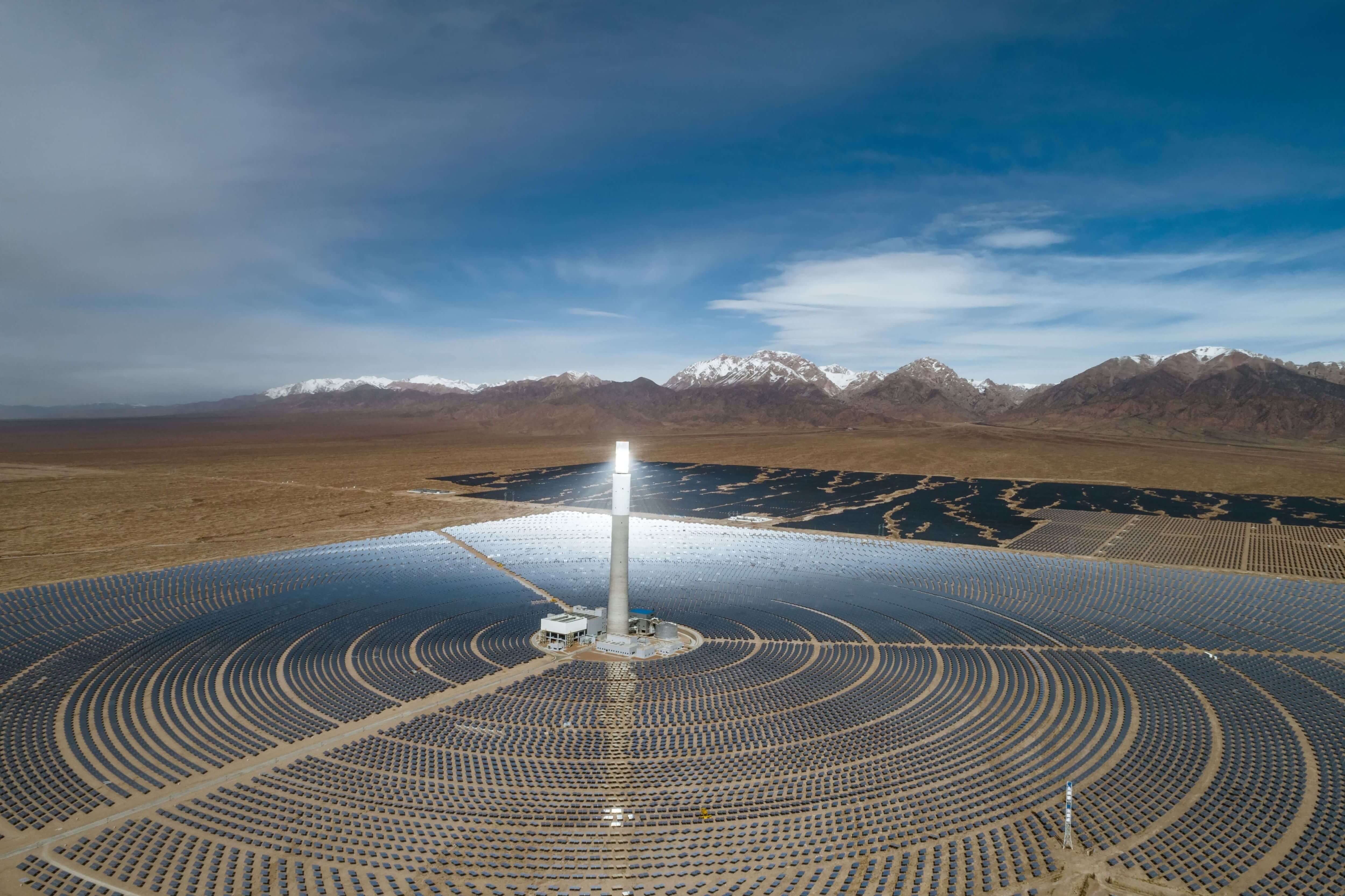 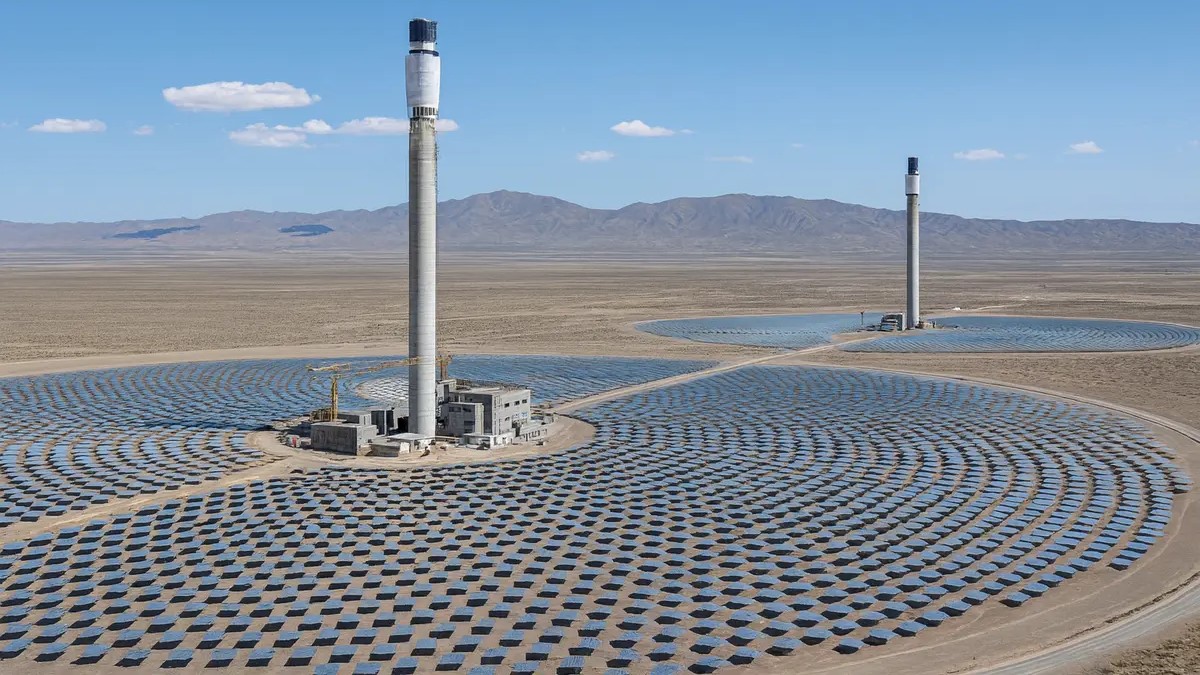 ## Scientists Are Building an “Artificial Sun” in the Desert — And It Could Change How Cities Get Power In a remote desert landscape, something extraordinary is taking shape. Thousands of mirrors stretch across the sand, reflecting sunlight toward a central tower that glows brighter than anything else in sight. Nearby, inside steel chambers and advanced laboratories, scientists are attempting something even more ambitious: recreating the energy process that powers the stars. Researchers and engineers have begun calling the project an **“artificial sun.”** The goal is simple but revolutionary — generate enormous amounts of clean electricity using the same fusion process that fuels the real sun. If successful, this technology could provide nearly unlimited energy for cities while dramatically reducing carbon emissions. ## What Is an Artificial Sun? The term “artificial sun” refers to **nuclear fusion reactors**, experimental machines designed to replicate the reaction happening inside stars. ### How fusion works In the core of the sun, hydrogen atoms collide under extreme heat and pressure. They fuse together to form helium, releasing massive amounts of energy. Scientists are trying to recreate that reaction on Earth. To do this, they: * Heat hydrogen fuel into plasma hotter than the sun’s core * Use powerful magnetic fields to hold the plasma in place * Trigger atomic fusion that releases energy If the process becomes stable and efficient, fusion could provide **clean, abundant electricity with minimal environmental impact.** ## Why the Desert Is the Perfect Location Fusion facilities and large solar energy complexes require huge amounts of space and sunlight. That’s why many experimental projects are being built in desert regions. ### Advantages of desert locations * Up to **300 sunny days per year** * Large open land areas for solar mirror fields * Low population density * Stable ground for heavy infrastructure The desert environment also allows researchers to combine fusion research with **concentrated solar power systems**, creating hybrid energy plants. ## The Role of Giant Mirror Fields One of the most striking features of the facility is the field of heliostats — massive mirrors that follow the sun across the sky. Each mirror reflects sunlight toward a central tower where heat is collected and stored. ### What heliostats do * Concentrate sunlight into extremely high temperatures * Produce steam that spins turbines * Store thermal energy in molten salt tanks * Generate electricity even after sunset This solar system provides immediate renewable power while supporting the experimental fusion infrastructure nearby. ## How the Artificial Sun Could Power Cities The long-term goal is to create power plants that operate around the clock without fossil fuels. Fusion could provide stable electricity regardless of weather conditions, solving one of the biggest challenges facing renewable energy today. ### Potential energy output Component | Purpose | Estimated Impact Solar mirror tower | Daytime renewable electricity | Up to 150,000 homes Fusion test reactors | Experimental constant power | ~50,000 homes in early phases Thermal storage tanks | Nighttime electricity supply | 4–6 hours grid backup Battery systems | Stabilize the grid | Instant response to demand spikes Although these numbers are still projections, the concept shows how multiple technologies could work together to power entire urban areas. ## Why Fusion Energy Is So Important Global electricity demand continues to grow as more systems move toward electrification — from vehicles to heating systems and data centers. Fusion energy offers several advantages compared with traditional power sources. ### Key benefits of fusion power * No greenhouse gas emissions during operation * Fuel derived from hydrogen, one of the most abundant elements * Minimal long-term radioactive waste * No risk of runaway chain reactions Because of these factors, fusion is often described as the **“holy grail of clean energy.”** ## The Biggest Challenges Scientists Still Face Despite decades of research, fusion remains one of the most difficult engineering challenges in modern science. Creating plasma hotter than the sun and controlling it inside a reactor requires incredibly precise technology. ### Major hurdles * Maintaining stable plasma for long periods * Designing materials that survive extreme heat * Scaling experimental reactors into commercial power plants * Reducing costs so electricity becomes affordable Scientists have made major breakthroughs recently, including successful experiments that produced **net energy gain for brief moments**. However, reliable commercial fusion power is still under development. ## Key Takeaways * Scientists are building experimental fusion reactors known as **artificial suns**. * These projects aim to generate massive amounts of clean electricity. * Desert locations provide ideal conditions for solar and fusion infrastructure. * Fusion could eventually deliver constant, low-carbon energy for cities worldwide. While the technology is still evolving, progress is accelerating as governments and private companies invest billions into fusion research. ## Frequently Asked Questions ### What is an artificial sun in energy research? An artificial sun is a nuclear fusion reactor designed to replicate the energy process that powers stars. ### Is fusion energy safer than nuclear power? Fusion generally produces less radioactive waste and cannot trigger runaway chain reactions like traditional nuclear fission plants. ### When will fusion power become widely available? Many experts expect early commercial fusion plants to appear between the **2030s and 2040s**, though timelines remain uncertain. ### Why are fusion experiments built in deserts? Deserts provide strong sunlight, large open land areas, and stable environments for building large energy facilities. ### Could fusion completely replace fossil fuels? Fusion could become a major clean energy source, but it will likely work alongside solar, wind, and other renewable technologies. ## Conclusion For decades, the idea of building a miniature star on Earth sounded like science fiction. Today, that vision is slowly becoming reality in remote deserts where scientists are testing the limits of physics and engineering. The artificial sun projects rising from the sand represent more than an experiment. They represent a new possibility for how humanity powers its future. If fusion energy succeeds, the lights in cities around the world may one day be powered by the same process that makes the stars shine.](https://ozpuff.com.au/wp-content/uploads/2026/03/Scientists-Are-Building-an-Artificial-Sun-in-the-Desert-—-And-It-Could-Change-How-Cities-Get-Power-1024x576.png)